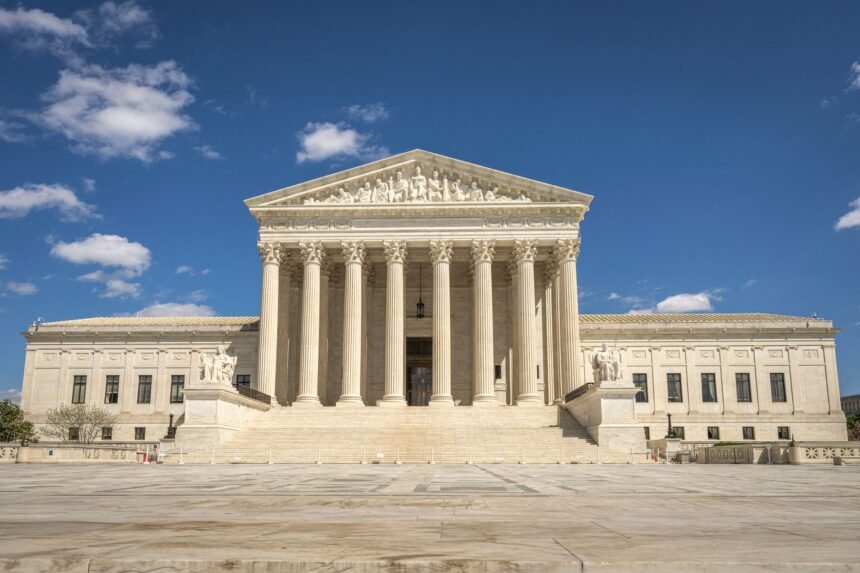
The Supreme Court of India is set to examine a petition on Friday concerning allegations of non-compliance with its interim directive that allows Muslims to perform Friday prayers near the contentious Bhojshala-Kamal Maula complex. This decision arose as a Bench, led by Chief Justice of India Surya Kant and Justices Joymalya Bagchi and V Mohana, reviewed an interlocutory application from the Muslim faction claiming a breach of the Court’s July 14 ruling.
Background of the Dispute
The Bhojshala-Kamal Maula site, located in Dhar, Madhya Pradesh, stands at the heart of a long-standing conflict. Hindus regard the site as an ancient temple devoted to Goddess Saraswati, while Muslims see it as the Kamal Maula Mosque. A significant development occurred on May 15 when the Madhya Pradesh High Court adjudged the area as a temple. This judgment nullified a 2003 Archaeological Survey of India (ASI) order, which had allowed Muslims to conduct prayers at the site, suggesting that the Muslim community should seek alternative land from the state for building a mosque.
Supreme Court’s Interim Order
On July 14, the Supreme Court intervened by granting temporary relief. The Court instructed the state to allocate an open space adjacent to or near the disputed site for Muslims to offer Friday prayers between 1 PM and 3 PM, ensuring that the rights of both communities remained unaffected. Furthermore, the Court restrained any modifications to the complex based on the High Court’s decision until the appeals were resolved.
Allegations of Non-Compliance
Senior Advocate Huzefa Ahmadi, representing the Muslim petitioners, highlighted that the state had designated a prayer site approximately two kilometers from the Bhojshala complex, contrary to the Supreme Court’s directive. “The order was clear that the land should be close to the Bhojshala site. We’ve already missed one Friday prayer due to the non-compliance,” Ahmadi emphasized, urging for an urgent hearing.
In response, Solicitor General Tushar Mehta pledged to address the issue, stating, “I will personally look into this and rectify the situation.” Despite Ahmadi’s plea to expedite the hearing, CJI Kant confirmed that the matter would be scheduled for Friday, July 24.
More Read
Ongoing Legal Proceedings
The Muslim community has challenged the Madhya Pradesh High Court’s verdict in the Supreme Court, arguing that the High Court improperly addressed disputed facts in its writ proceedings, thereby disrupting a long-standing arrangement that allowed both communities to worship at different times.
This ongoing legal saga continues to capture attention, as the resolution of the Bhojshala-Kamal Maula complex dispute remains pivotal for both communities involved.