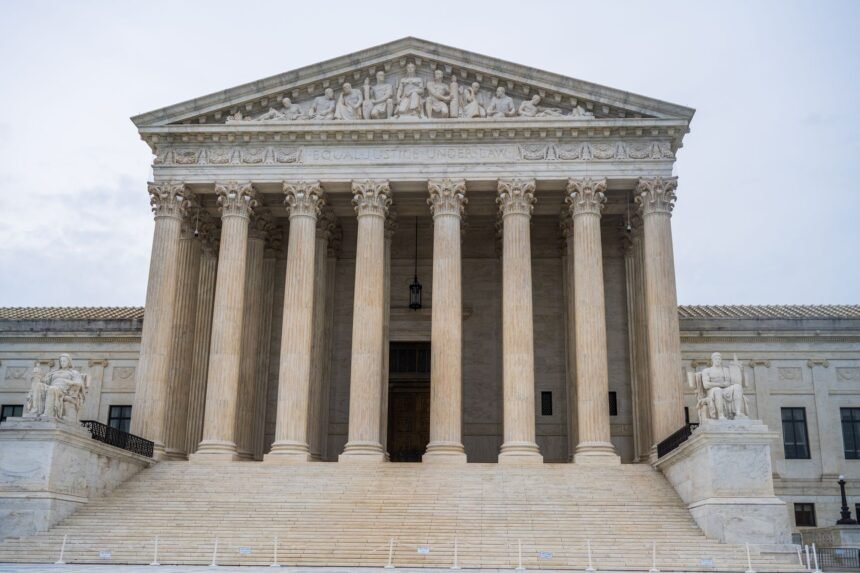
Supreme Court Calls for Action on Pending Execution Petitions
The Supreme Court of India has expressed concern over the backlog of civil execution petitions, which exceed 800,000 cases in district courts nationwide. In a session on Thursday, the Court highlighted that merely requesting updates on case pendency biannually is inadequate. This observation stems from the case Periyammal (Dead) and Ors. vs V Rajamani and Anr., where the Court underscored the urgency in addressing these delays.
A Bench comprising Justices JB Pardiwala and K Vinod Chandran reviewed compliance reports from various High Courts following previous directives aimed at reducing execution delays. These proceedings trace back to a March 6, 2025, decision, which resolved a longstanding property dispute dating back to 1986. The Supreme Court had decreed that execution petitions should be resolved within six months, warning that judicial officers could face administrative consequences if this timeline is not met.
Senior Advocate Gopal Sankaranarayanan, serving as Amicus Curiae, presented a detailed report to the Bench. He noted that delays were often due to interim stays, objection petitions, non-appearance of counsel, and frequent adjournments. He emphasized grassroots issues, stating, “A large number of problems occur because either the judgment debtor is not issued notice or their properties are not identified, which are major hurdles.”
Justice Pardiwala, acknowledging the alarming number of pending cases, stated, “We need your assistance for these pending execution petitions which are currently 8 lakh.” The Bench discussed potential administrative solutions, referencing Rule 12 of the Commercial Courts Rules, which advocates for specialized monitoring cells to oversee the execution process.
Justice Pardiwala queried, “Why can’t the High Courts establish these cells? These cells can monitor the entire process of execution in different courts.” Upon learning that only one High Court had implemented such a cell, the Bench questioned the lack of similar initiatives in other High Courts.

Additional Solicitor General (ASG) Aishwarya Bhati indicated the Central government’s plan to amend the parent Act and the Code of Civil Procedure (CPC) to address issues related to delegated legislation. Justice Pardiwala proposed incorporating a statutory timeline within the Act, suggesting, “You can say in the Act itself that execution shall be in accordance with a schedule. You can introduce a schedule in the Act itself.”
The Bench emphasized the necessity for tangible case resolutions, stating, “We will call for a progress report from different High Courts as to what is the progress. How many execution petitions have been decided and disposed of. Just calling for these figures every 6 months is not enough. We need to do something more.”
The Court has requested a concise report from the Amicus and the ASG summarizing the day’s proceedings and scheduled the next hearing for October 7.