Supreme Court Hears Contentious Cauvery Water Dispute
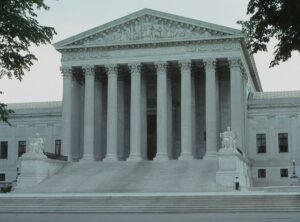
The Supreme Court of India convened to deliberate on the ongoing Cauvery river water dispute, a matter that has long been a source of contention between the states of Tamil Nadu and Karnataka. During the recent hearing, compelling arguments were presented regarding crop failures, monsoon deficits, and drought conditions affecting both states.
Tamil Nadu’s Plea for Water Release
Representing Tamil Nadu, Senior Counsel CS Vaidyanathan expressed concerns that the state has suffered the loss of its Purvai crop, an early Kharif crop, due to insufficient water. Vaidyanathan asserted, “We have already lost Purvai crop, a late Kharif crop because of lack of water. We are only seeking enforcement of the award which requests proportional release. I just get 50.5% I am not getting that.” Tamil Nadu called for the enforcement of the water-sharing award to ensure fair distribution.
Karnataka’s Drought Challenge
On the other hand, Karnataka, represented by Senior Counsel Shyam Divan, argued that the state is grappling with drought-like conditions. Divan stated, “We are facing a drought situation. Cauvery Water Management Authority (CWMA) is an expert body. It knows exactly what’s happening. This is a hands-off approach. There is a 15-day periodic monitoring. This is a difficult situation for us but we are complying it. Now that monsoon is on retreat, there is very little chance of rain. Whereas they (TN) will have the advantage of the northeast monsoon. CWMA has considered this. This matter should not move forward over here.”
Judicial Intervention
The Bench, composed of Justices Vikram Nath and Sandeep Mehta, directed Karnataka to respond to Tamil Nadu’s application for the release of its water share. The case has been scheduled for further hearing on October 12.
Key Arguments and Future Directions
During the proceedings, Vaidyanathan highlighted that Karnataka is utilizing all available water resources, urging the CWMA to address Tamil Nadu’s shortfall. Vaidyanathan claimed a shortfall of 20 thousand million cubic feet (TMC) of water, contrasting Karnataka’s estimate of 16 TMC.

In response, Divan emphasized Karnataka’s compliance with CWMA directives, despite the drought, and noted that the state has been releasing water as required. “There are directions issued by CWMA, whatever directions passed, despite being a drought here and impossible for us to comply, we have been releasing the water. So much so that there is an excess amount,” Divan remarked.
Justice Nath and Justice Mehta acknowledged the issues of deficit raised by Tamil Nadu and emphasized the necessity for CWMA’s intervention. The Court has asked Karnataka to address these concerns, especially given the differing monsoon patterns and their impact on the states.
As the hearing progresses, the Supreme Court’s decision will play a crucial role in determining equitable water distribution between Tamil Nadu and Karnataka, amid a backdrop of regional climatic challenges.