

P&H High Court’s Verdict on Harbhajan Singh’s Security
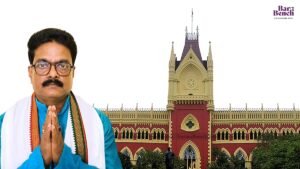
The Punjab and Haryana High Court recently addressed the issue of the withdrawal of security for cricketer and Member of Parliament (MP) Harbhajan Singh. The Court clarified that the Punjab government’s decision to retract Singh’s security was not a hasty reaction following his departure from the Aam Aadmi Party (AAP) to join the Bharatiya Janata Party (BJP).
Justice Tribhuvan Dahiya presided over the case, emphasizing that the decision stemmed from a threat assessment conducted by the Security Review Committee on March 3, predating Singh’s political realignment. “It cannot be said the petitioner’s security cover has been withdrawn abruptly due to his leaving the party. The decision to withdraw had been taken by the Review Committee much earlier, which is not denied,” stated the Court.
Security Withdrawal and Subsequent Actions
The withdrawal of Singh’s security by Punjab Police followed shortly after he and six other AAP MPs transitioned to the BJP in April. Singh subsequently filed a petition with the High Court to restore his security, which initially included around 25 police personnel. He claimed that following the security withdrawal, AAP workers staged a protest outside his Jalandhar residence, and the police failed to intervene when his house was allegedly “attacked by the mobsters.” Singh argued that the security retraction was executed in “a very vindictive manner” under orders from the local AAP administration, without a proper assessment of his threat level.
On April 30, the Court directed Punjab police to ensure no harm befalls Singh or his family while in Punjab. The State government later informed the Court that Singh had already been accorded ‘Y+’ category security by the Central government, facilitated through the Central Reserve Police Force (CRPF).
Court’s Final Ruling and Observations
In its decision on July 9, the Court stated that no additional instructions were necessary since Singh had CRPF security. Furthermore, the Punjab Police committed to providing local area security whenever Singh is present in Punjab. Regarding the protests at Singh’s residence, the Court noted they did not constitute a sufficient threat to his life.

“The protests outside his residence or his being branded a traitor, would not establish threat to his life and liberty ipso facto. The protest was not violent either,” the Court remarked.
Representing Singh were Advocates Harpreet S Multani, Harmanpreet S Mander, Ramaninder S Jagal, Kritika, and Amardeep Singh. The State’s representation included Additional Advocate General Chanchal K Singla, Deputy Advocate General Vikas Arora, with Advocates Medha Diwan and Kavita Joshi. Additional Solicitor General of India Satya Pal Jain, accompanied by Senior Panel Counsel Saigeeta Srivastava, appeared for the Union government.