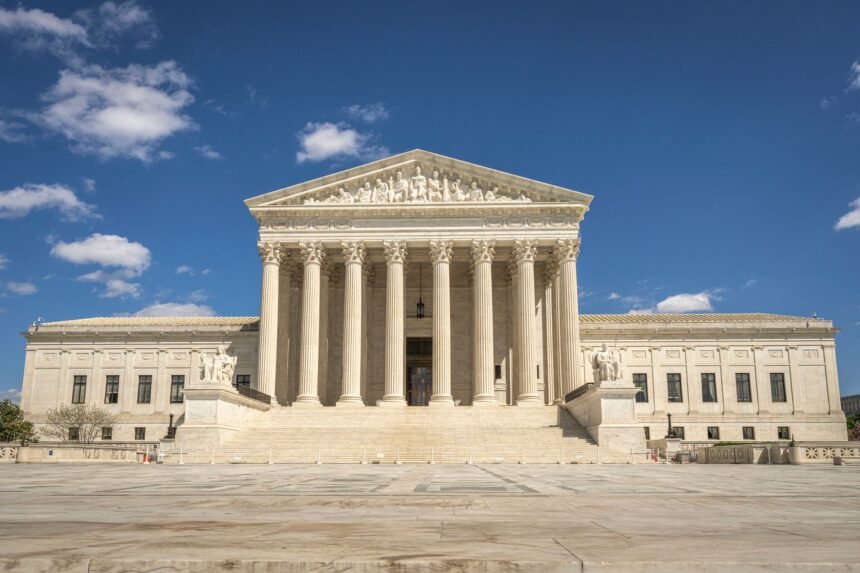
The President of India, Droupadi Murmu, has officially approved the Supreme Court (Number of Judges) Amendment Act, 2026, marking a significant increase in the number of judges at the nation’s highest court. This legislative change will raise the total number of Supreme Court judges from 34 to 38, inclusive of the Chief Justice of India.
This amendment, which received presidential assent on August 11, has been duly published in the Gazette of India. It will retroactively take effect from May 16, 2026, the date when the Supreme Court (Number of Judges) Amendment Ordinance, 2026, was initially promulgated by the President. The current Act repeals the original Ordinance but validates all actions taken under it during its tenure.
The legislative journey of the Bill began on July 20 when Union Minister of State for Law and Justice, Arjun Ram Meghwal, introduced it in the Lok Sabha. The Lower House passed the Bill on August 3, and the Rajya Sabha followed suit on August 5. It was classified as a money bill in accordance with Article 110 of the Indian Constitution.
During the parliamentary debate, Meghwal highlighted a request from Chief Justice of India (CJI) Surya Kant, who had written to Prime Minister Narendra Modi on May 11, advocating for an increase in the Court’s sanctioned strength. CJI Kant emphasized the mounting influx of legal cases and the challenges faced in maintaining effective case disposal rates, particularly when judges are allocated to Constitution Benches. He pointed to the recently formed nine-judge bench dealing with the Sabarimala case as a pertinent example.
As of January 1, 2026, the Supreme Court was grappling with a backlog of over 92,000 cases. The previous year, the Court saw 75,410 new matters filed but managed to dispose of just over 65,000 cases. The government anticipates that the expanded bench will enhance judicial capacity, allow for the formation of larger benches, and significantly address the backlog of cases.

This marks the first increase in the Supreme Court’s sanctioned strength since 2019, when it was elevated from 30 to 33 judges, not including the CJI. The Court originally commenced operations in 1950 with a total of eight judges. Over the years, its strength was incrementally increased to 11 in 1956, 14 in 1960, 18 in 1978, 26 in 1986, and finally 31 in 2009.
Currently, the Supreme Court has three vacant positions, with 35 judges serving against its new sanctioned strength of 38, including the Chief Justice of India.