Supreme Court Intervenes in Defamation Case Against Rahul Gandhi
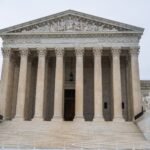
The Supreme Court of India has temporarily halted the ongoing criminal defamation proceedings against Congress leader Rahul Gandhi, which were being heard in a Lucknow court. This case arose from Gandhi’s comments during the 2022 Bharat Jodo Yatra, where he remarked that ‘Chinese soldiers are beating up Indian Army personnel in Arunachal Pradesh.’ These statements were made in a broader critique of the government’s handling of the border situation with China.
A judicial Bench comprising Justices Dipankar Datta and Augustine George Masih questioned Gandhi’s decision to air such grievances on social media rather than in Parliament, emphasizing the importance of credible sources in sensitive matters. The Bench remarked, “Why in social media post and not in parliament? How do you get to know when 2000 sq km was acquired by China? What is the credible material? A true Indian will not say this. When there is a conflict across border, can you say all this. Why can’t you ask the question in parliament? Just because you have 19(1)(a) [freedom of speech] you cannot say anything.”
Senior Advocate Abhishek Manu Singhvi, representing Gandhi, argued that the defamation charges were an undue burden, noting that the High Court’s reasoning in allowing a third-party defamation claim was flawed. “But you cannot harass somebody like this with defamation charges. High Court says he (complainant) was not a person aggrieved but defamed. High Court reasoning was novel was not correct,” Singhvi stated.
The Supreme Court has issued a notice to the State and will revisit the matter in three weeks. This pause comes as a response to Gandhi’s appeal against an Allahabad High Court decision which upheld a summons for him to appear in the defamation case.
Legal Background and Implications
The case originated from a complaint lodged by lawyer Vivek Tiwari, representing Uday Shankar Srivastava, a retired director of the Border Roads Organisation and former Army Colonel. Tiwari claimed that Gandhi’s comments about the December 9, 2022, clash between Indian and Chinese forces were derogatory and damaging to the Indian Army’s reputation.

Earlier, Additional Chief Judicial Magistrate Alok Verma had directed Gandhi to attend a hearing on March 24, which led to Gandhi approaching the Allahabad High Court. The High Court dismissed Gandhi’s plea, citing Section 199(1) of the CrPC, which allows individuals not directly harmed by an offense to be considered ‘aggrieved persons’ if the offense impacts them adversely.
The High Court ruled that the complainant, due to his respect for the Army and personal offense taken from Gandhi’s remarks, qualified as an aggrieved person under the legal provision, thus justifying the defamation claim.
This case underscores the delicate balance between freedom of expression and the protection of institutional reputation, particularly in the context of national security and defense forces.