Supreme Court Addresses Prosecutor Shortage
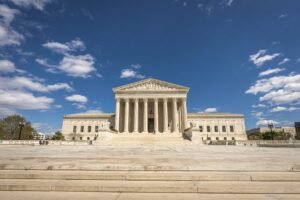
The Supreme Court of India has expressed concern over the shortage of public prosecutors, identifying it as a key factor contributing to delays in criminal trials. On Friday, the court urged state governments to promptly address this issue by filling vacant positions during their summer vacations. This directive was delivered in the case of Dolubhai Vihabhai Gohil v. State of Gujarat.
Judicial Observations
Justices BV Nagarathna and Ujjal Bhuyan made these observations while granting bail to an individual charged under the Narcotic Drugs and Psychotropic Substances Act (NDPS Act). The bench remarked, “You say that there is a delay in criminal justice dispensation in the country. You ask us, we will give you the suggestions. Will you implement it? Please all of you State counsel, ask your governments to appoint prosecutors.”
The court further instructed state counsel appearing before it to escalate this issue to relevant authorities. “All of you appearing as State Counsel, please advise, bring it to the Law Minister, Advocate General, Director of Prosecution and in the summer holidays, please use this time for all this, you see effective suggestions to be implemented,” they added.
Case Background
The Supreme Court was reviewing an appeal against a Gujarat High Court decision that denied bail to an accused individual charged under Sections 8(b), 8(c), and 18(c) of the NDPS Act. The High Court had denied bail based on the claim that 141 kg of opium, a “commercial quantity” under the NDPS Act, was allegedly found on the accused’s property.
In appealing to the Supreme Court, the accused’s counsel argued that the maximum potential sentence under the relevant provisions is ten years and noted that the accused had been in custody for over three years since March 4, 2023. The defense also highlighted that only six of the 46 cited witnesses had been examined, indicating that the trial’s conclusion could be significantly delayed.
More Read

Practical Implications
The bench acknowledged the practical difficulties caused by the lack of prosecutors, stating, “Please appoint public prosecutors. He is not able to open the case even if the timetable is made. The prosecutor cannot come and open the case and therefore this contention that the trial may be inevitably delayed so grant bail and then they will abscond. What happens to the crime? Somebody must examine all of this.”
Despite the state’s opposition, which maintained that the appeal lacked merit, the Supreme Court decided in favor of the accused. The court granted bail, subject to conditions set by the trial court.
For the full details, please refer to the Supreme Court Order.