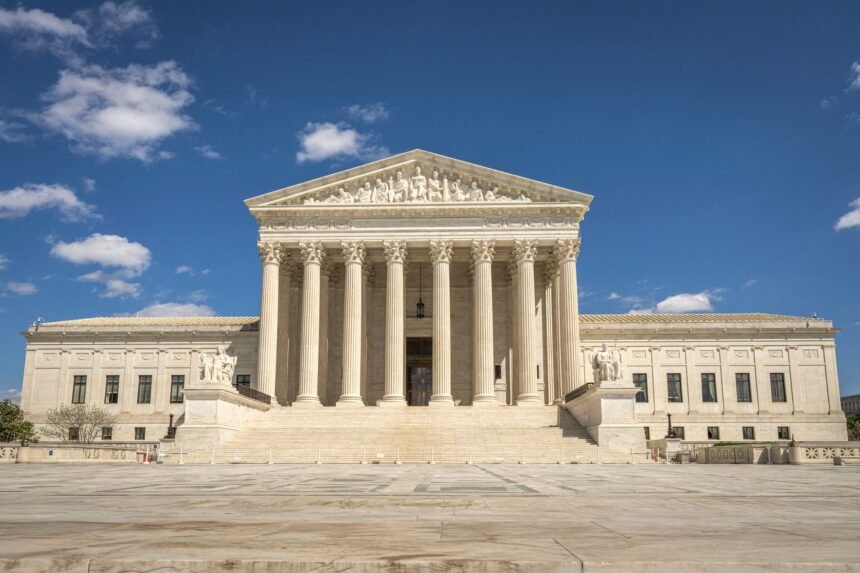
The Supreme Court of India has taken a significant step by directing the Delhi government to provide medical treatment to protestors at Jantar Mantar who sustained injuries from pellet guns deployed by the police. In a session held on Thursday, this directive came from a Bench led by Chief Justice of India (CJI) Surya Kant, along with Justices Joymalya Bagchi and V Mohana.
This ruling was in response to a plea filed by Yashovardhan Azad, a former Intelligence Bureau special director, who challenged the use of pellet guns. Azad argued that the pellet guns, employed by the Rapid Action Force during a peaceful assembly, were excessive, and those injured deserved medical care and compensation as a public law remedy.
The court’s decision underscored the necessity for the Delhi government to ensure medical attention for the injured petitioners, highlighting that the victims of these pellet guns should receive adequate treatment.
The plea brought forth by Azad called for a ban on the use of metallic kinetic projectiles, or pellets, fired from pump-action rifles or projectile action guns (PAG) for crowd control during civilian gatherings. The plea emphasized that such measures should be reconsidered, and those affected should be compensated adequately.
During the hearing, Justice Bagchi noted that current police regulations permit the use of pellet guns only in exceptional situations. He remarked, “Police rules allow their use in exceptional circumstances unless the rules themselves are challenged.” The Bench suggested that a protocol should be established to address the alleged excessive use of such force.
More Read
Advocate Vrinda Grover, representing the petitioners, contested that there was no standing order from the Delhi police mandating the use of pellet guns, advocating for a non-violent approach to handling protests. “If such an order exists, it should be presented. I believe neither the Union nor the NCT intends to use pellets against students,” Grover stated.
Justice Bagchi emphasized the importance of equipping the police in a manner that avoids resorting to such measures, adding, “Arm your police in a way that they don’t have to resort to such actions.” Solicitor General Tushar Mehta, representing the government, concurred with the notion, acknowledging the need for protective measures but agreeing with the principle of restraint.
The Supreme Court ultimately advised the petitioner to modify the plea to specifically challenge the rules that permit the use of pellet guns, paving the way for a more focused legal argument. This decision marks a crucial point in the ongoing debate over the use of force in managing civilian protests in India.