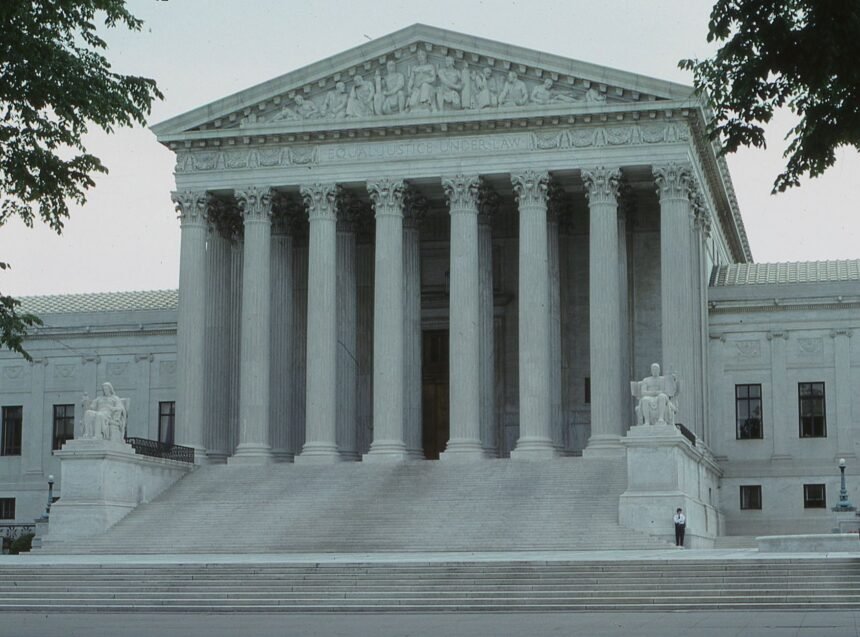
Supreme Court Overturns Penalty Due to AI Errors
The Supreme Court of India recently annulled a ₹425.28 crore customs penalty imposed on a diamond trader, citing the use of non-existent legal cases and AI-generated inaccuracies in the customs order. The ruling follows a bench decision by Justices Dipankar Datta and Sheel Nagu, highlighting the flaws in relying on artificial intelligence for legal adjudications.
Case Background
The case involved Vijay Ghanshyam Gadiya, who faced penalties from the Additional Commissioner of Customs in Surat. The penalty, issued on October 8, 2025, was based on accusations that Gadiya misdeclared natural diamonds as lab-grown to reduce tariffs, violating Section 114 of the Customs Act, 1962.
Gadiya contested the penalty in the Gujarat High Court, which dismissed his plea on January 20, 2026. This led him to appeal to the Supreme Court, arguing that the customs officer had relied on AI-generated judgments and articles that were either incorrect or fictitious.
Supreme Court Findings

The Supreme Court examined the evidence and found Gadiya’s claims credible. Their scrutiny revealed that some case laws cited by the customs officer did not exist or were inaccurately referenced. Furthermore, even existing cases were interpreted incorrectly, attributed to AI errors.
The bench remarked, “The use of AI in this case, resulting in reliance placed by the second respondent on material which is dubious, proves fatal to the sustainability of the order imposing penalty on the appellant. Such circumstances compel us to interfere and remand the case.”
AI as an Assistive Tool
More Read

While acknowledging AI’s potential to assist in decision-making, the Supreme Court cautioned against over-reliance on it for judicial determinations. “Assistance can never be substituted for adjudication. AI may well serve as training wheels but entrusting it with the pilot’s seat would be both imprudent and dangerous,” stated the Court.
The Court also referenced its earlier decision in Pooja Ramesh Singh v. Jammu & Kashmir Bank Limited, emphasizing a zero-tolerance stance towards the use of unverified AI-generated legal precedents.
Future Proceedings
Given these findings, the Supreme Court has mandated a fresh review of Gadiya’s case by another officer of the same rank, distinct from the original adjudicator. Additionally, it left the decision to initiate actions against the customs order’s author to the appointing authority.
This verdict underscores the critical need for human oversight in legal processes, even as AI technology continues to evolve. [Read Judgment]