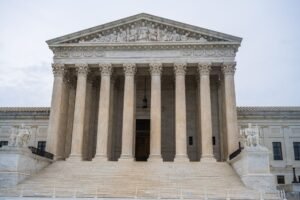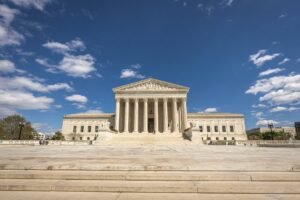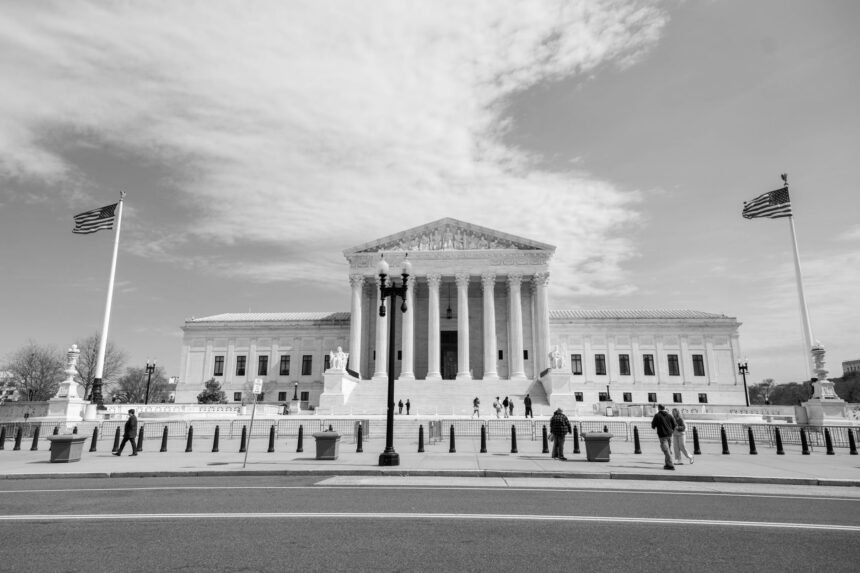
The Supreme Court of India has advised the Tamil Nadu government to reconsider its stance on teaching Hindi in educational institutions within the state. This recommendation was made during a hearing involving the establishment of Navodaya Vidyalayas in Tamil Nadu, a case officially titled The State of Tamil Nadu vs. Kumari Maha Sabha.
A judicial bench composed of Justices BV Nagarathna and AG Masih expressed these sentiments as the Tamil Nadu government resisted the opening of Navodaya schools, which are centrally funded and operate under the aegis of the Navodaya Vidyalaya Samiti, part of the Union Ministry of Education. The primary point of contention is the three-language policy followed by these schools, which includes Hindi, conflicting with Tamil Nadu’s two-language policy.
Justice Nagarathna remarked, “You have to change your mindset; it can’t be that Hindi will not be taught in the soil of Tamil Nadu.” The court also emphasized the importance of not alienating Delhi, suggesting that welcoming additional educational opportunities would not diminish the state’s educational standards.
The remarks followed Tamil Nadu’s assertion that the lack of cooperative federalism was problematic. The Supreme Court was reviewing Tamil Nadu’s appeal against a Madras High Court decision, which had directed the state to set up Navodaya Vidyalayas in every district, stating that these institutions did not contravene the Tamil Nadu Tamil Learning Act. The High Court had further ruled that the state’s blanket refusal restricted students’ rights to choose educational institutions, mandating temporary accommodation for 240 students per district.
Challenging this ruling, Tamil Nadu had approached the Supreme Court, arguing that education policy was within its jurisdiction and incompatible with the Navodaya model. Despite this, in December 2025, the Supreme Court directed Tamil Nadu to identify land for the schools within six weeks, a directive the state sought to have recalled. The Supreme Court declined to withdraw the order but extended the compliance period by three months, urging further dialogue between central and state representatives on the policy matter.
More Read

Justice Nagarathna reiterated that Navodaya Vidyalayas do not contradict state policies and highlighted the need for dialogue regarding language policy. Senior Advocate Jaideep Gupta, representing the Tamil Nadu government, countered that the policy undermined Tamil, arguing that such imposition was not the Constitution’s intention. However, the court maintained that Tamil Nadu must provide land for these schools.
The Bench noted, “We can’t say that a Central government policy is left to the State to accept or not,” while Gupta contended that enforcing the policy could disrupt a long-standing practice. Justice Nagarathna responded that the state must adhere to the general Navodaya policy.
Justice Nagarathna further commented that a change in mindset was expected with the change in state government, although Gupta maintained that cooperative federalism must be mutual. The court dismissed this argument, emphasizing the need for dialogue and relaxation of rigid mindsets.
More Read

Justice Nagarathna also remarked, “Today it is education, tomorrow it will be something else. You have to relax this rigidity in your mind,” urging the state to view the central scheme as its own. Gupta expressed concerns over financial responsibilities, citing past experiences with central funding delays.
Additional Solicitor General KM Nataraj, representing the central government, assured that the state only needs to provide land, with the central government handling the rest. Justice Nagarathna concluded, “Ultimately everybody must work together. That perception that you are surrendering to the Central government should not be there.” The case is scheduled for further hearing on December 14.