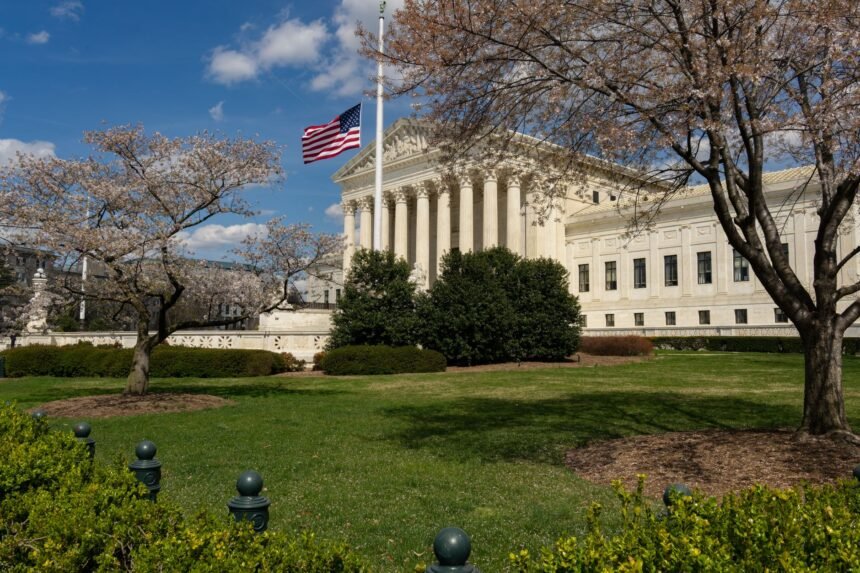
The Supreme Court of India delivered several pivotal judgments concerning the Arbitration and Conciliation Act, 1996 (“Arbitration Act”) between January and June 2026. This article summarizes the key rulings.
Impact of Non-Issuance of Section 21 Notice
In M/s Bhagheeratha Engineering Ltd. v. State of Kerala, 2026 INSC 4 (January 5, 2026), the Court clarified that a Section 21 notice is not mandatory before initiating arbitration. The notice serves to mark the commencement of proceedings and helps in determining the limitation period. Thus, failing to issue it does not invalidate an otherwise valid and arbitrable claim.
Scope of Court Interference under Section 37
In Jan De Nul Dredging India Pvt. Ltd. v. Tuticorin Port Trust, 2026 INSC 34 (January 7, 2026), the Court held that the appellate jurisdiction under Section 37 mirrors the restrictions under Section 34. Courts should not interfere with an arbitral award merely on the possibility of an alternative view. The Section 37 power is limited to assessing whether the Section 34 Court acted within its jurisdiction.
Jurisdiction for Section 29A (4) Applications
In Jagdeep Chowgule v. Sheela Chowgule & Ors., 2026 INSC 92 (January 29, 2026), the Supreme Court ruled that applications under Section 29A (4) should be filed in the Civil Court of ordinary original jurisdiction and not the High Court or Supreme Court. The exercise of jurisdiction under Section 11 is exhausted once the arbitral tribunal is constituted.
Modification of Compensation under Section 37
In M/s Saisudhir Energy Ltd. v. M/s NTPC Vidyut Vyapar Nigam Ltd., 2026 INSC 103 (January 30, 2026), it was determined that while modification of awards by the Section 34 Court is permissible to apply contractual terms, Section 37 Courts should not reassess compensation unless the initial determination is arbitrary or beyond contractual limits.

Validity of Arbitral Proceedings During Moratorium
In Ankhim Holdings Pvt. Ltd. & Anr. v. Zaveri Construction Pvt. Ltd., 2026 INSC 137 (February 4, 2026), the Court found that proceedings held during a moratorium are not nullified under Section 15(2). The proper course is to appoint a substitute arbitrator to continue proceedings rather than nullifying previous ones.
Substitution of Arbitrator Under Section 29A (6)
In Viva Highways Ltd. v. Madhya Pradesh Road Development Corporation Ltd. & Anr., SLP (C) No. 38327/2025 (February 6, 2026), the Court stated that substituting an arbitrator is not automatic upon mandate termination under Section 29A (4). The need for substitution depends on the specific case context.
Restrictions on Pre-Award Interest
In Union of India & Ors. v. Larsen & Toubro Limited, 2026 INSC 203 (February 27, 2026), the Court underscored that arbitrators must adhere to contractual provisions over statutory discretion when awarding pre-award interest. Post-award interest, however, remains subject to judicial modification.
More Read

Doctrine of Transnational Issue Estoppel
In Nagaraj V. Mylandla v. PI Opportunities Fund-I and others, 2026 INSC 298 (March 25, 2026), the Court ruled that factual issues resolved by the seat court cannot be re-litigated in enforcement proceedings, emphasizing the principle of transnational issue estoppel.
Jurisdiction Based on Arbitration Venue
In J&K Economic Reconstruction Agency v. Rash Builders India Pvt. Ltd., 2026 INSC 368 (April 15, 2026), the Court clarified that the seat, not the venue, of arbitration determines jurisdiction. The venue is for convenience and does not confer legal jurisdiction.
Interpretation of “Can” in Arbitration Clauses
In Nagreeka Indcon Products Pvt. Ltd. v. Cargocare Logistics (India) Pvt. Ltd., 2026 INSC 384 (April 17, 2026), it was held that “can” indicates possibility, not obligation, and does not create a mandatory arbitration clause unless further consent is given.
Post-Award Section 9 Applications by Unsuccessful Parties
In Home Care Retail Marts Pvt. Ltd. v. Haresh N. Sanghavi, 2026 INSC 415 (April 24, 2026), the Court affirmed that unsuccessful parties can apply for interim measures under Section 9 post-award, although such applications warrant careful judicial scrutiny.
Challenge Based on Expired Arbitrator Mandate
In Gujarat Water Supply and Sewerage Board v. Saryu Plastics Pvt. Ltd., 2026 INSC 552 (May 26, 2026), participation in proceedings without objection was deemed acquiescence, barring subsequent challenges on mandate expiry.
Writ Jurisdiction for Section 16 Orders
In M/s Tarini Prasad Mohanty v. M/s Sunflag Iron and Steel Company Limited, 2026 INSC 566 (May 27, 2026), the Court held that writ jurisdiction over Section 16 orders is limited and should not substitute for the statutory remedy under Section 34.
More Read

Jurisdictional Challenges in Sections 34 and 37
In Madhya Pradesh Road Development Corporation Ltd. v. M/s Jabalpur Corridor Pvt. Ltd., 2026 INSC 590 (May 29, 2026), the Court reiterated the narrow scope of Sections 34 and 37, and barred repetitive jurisdictional challenges.
Limitation Period Under Section 34(3)
In National Highway Authority of India v. T. Younis & Anr., 2026 INSC 616 (June 2, 2026), the limitation for a Section 34 application starts from the disposal date of a Section 33 request, not the original award date.
Authors: Krishna Vijay Singh, Senior Partner, and Muneeb Rashid Malik, Senior Associate at Kochhar & Co.
Disclaimer: The views expressed are solely those of the authors and do not necessarily represent the views of Bar & Bench.
For submissions, please fill out the form here.