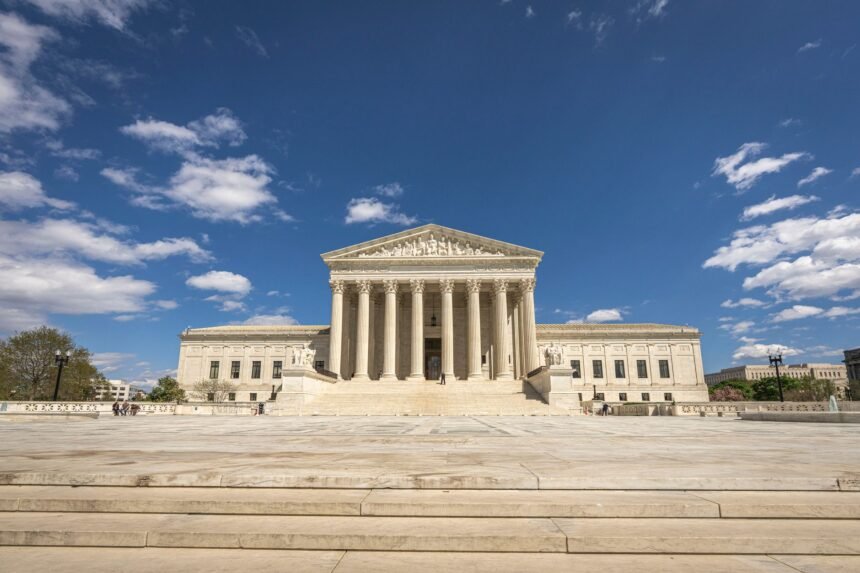
The Supreme Court of India, on Wednesday, raised critical questions regarding the Election Commission of India’s (ECI) decision amidst the internal conflict within the Shiv Sena party. The apex court questioned why the bow-and-arrow symbol, traditionally associated with the Shiv Sena, was not withheld from both factions in the absence of definitive criteria.
The Bench, comprising Chief Justice of India Surya Kant, Justice Joymalya Bagchi, and Justice V Mohana, was deliberating on multiple challenges resulting from the Shiv Sena’s division. These challenges include the ECI’s recognition of the Eknath Shinde faction as the legitimate party and the Maharashtra Speaker’s decision against disqualifying MLAs who switched allegiances.
During the proceedings, Justice Bagchi highlighted the potential for both factions to select new symbols and compete based on their individual strengths rather than relying on the legacy symbol associated with Bal Thackeray. He emphasized that while the Tenth Schedule addresses the conduct of legislators, disputes over reserved symbols pertain to the political party at large.
Senior Advocate Neeraj Kishan Kaul, representing the Shinde faction, defended the ECI’s decision, explaining that the commission relied on legislative majority due to the unique circumstances and challenges in assessing the party’s organizational structure. Kaul argued that the party’s structure was heavily influenced by nominated members, which did not accurately reflect the will of the party’s broader cadre, and therefore, evaluating legislative strength was deemed the most viable option.
Kaul further referenced the Supreme Court’s decision in the Subhash Desai case, asserting that the ECI was not barred from considering legislative strength under paragraph 15 of the Symbols Order. He added that even if legislators were disqualified, it would not nullify the election results, votes, or the party’s vote share.
More Read
Following submissions from Senior Advocate Kapil Sibal for the Uddhav Thackeray faction, the court explored whether a split within the legislative group could reflect within the party’s political identity. Sibal contended that a legislative majority should not be allowed to claim the party’s name and symbol.
The Shiv Sena’s internal split in 2022 resulted in two factions—one led by Uddhav Thackeray and the other by Eknath Shinde. The ECI, in its resolution, chose to recognize the Shinde faction based on its legislative majority, noting that the Shinde faction had 40 Members of the Legislative Assembly (MLAs) compared to the Thackeray faction’s 15 MLAs. Additionally, in the Lok Sabha, 13 out of 18 Members of Parliament (MPs) supported the Shinde faction.
The ongoing hearings continue to dissect the intricate dynamics of the political party identity versus legislative strength, with the Supreme Court scrutinizing the justification for the ECI’s decisions.