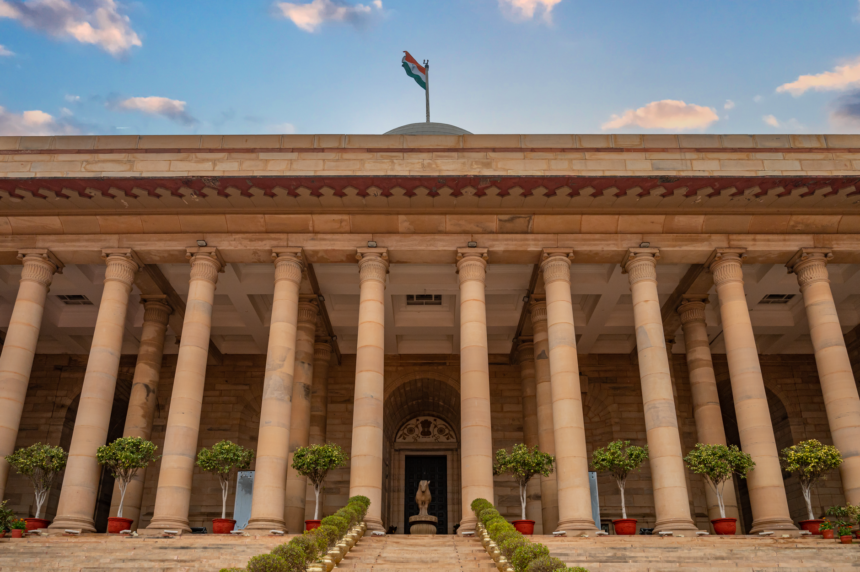
Supreme Court Decision on Madrasa Teachers’ Plea
The Supreme Court of India, on Monday, dismissed a series of petitions filed by teachers and non-teaching staff from recognized Madrasas in West Bengal. These individuals had sought regularized appointments and payment under the State government’s grant-in-aid scheme, a decision previously reviewed by a committee established by the Supreme Court in 2023. The judicial panel, comprising Justices Dipankar Datta and A.G. Masih, delivered the verdict.
Court’s Examination and Decision
Earlier, the Supreme Court had decided to scrutinize the claims of 13 petitioners, out of the over 350 involved, to determine if any warranted relief. The Court declared that none of these 13 individuals met the criteria to be considered for relief. “We proceeded on the basis that if any one of these 13 petitioners persuaded us to hold in his or her favor, we would examine the remaining cases as well. Unfortunately, none of the 13 petitioners could impress us,” the justices remarked, leading to the dismissal of all pending petitions.
Background of the Case
Approximately 361 individuals, claiming to have been appointed as teachers or support staff in various Madrasas across West Bengal, initiated over 40 writ petitions under Article 32 of the Constitution. The dispute revolved around the West Bengal Madrasah Service Commission Act, 2008, a legislative measure designed to formalize the appointment of teachers in recognized Madrasas.
In 2014, a single-judge bench of the Calcutta High Court invalidated this Act, a decision later upheld by a Division Bench in 2015. However, the Supreme Court intervened, staying the Division Bench’s judgment in March 2016. Eventually, on January 6, 2020, in the case of Sk. Md. Rafique v. Managing Committee, Contai Rahamania High Madrasah, the Supreme Court confirmed the constitutional validity of the 2008 Act. The focus then shifted to appointments made prior to the Supreme Court’s validation.
Committee Findings and Subsequent Legal Developments
In February 2023, the Supreme Court appointed a committee to assess the validity of appointments made after the Calcutta High Court’s 2015 decision but before the Supreme Court’s 2020 judgment. The committee concluded that these appointments were invalid, prompting the affected employees to challenge the findings.
More Read

In August 2024, the Supreme Court issued an interim order safeguarding the petitioners’ employment, and in May 2025, it mandated that the State pay salaries to those actively engaged in teaching, pending further orders. The Court’s main concerns included evaluating the committee’s rejection of the petitioners’ claims and determining if any appointments warranted recognition, continuation in service, and compensation under the State’s grant-in-aid program.