Bar Council of India Directs Universities to Conduct Physical Inspections
The Bar Council of India (BCI) has issued a mandate requiring all universities offering legal education to perform physical inspections of their affiliated law colleges. This directive, outlined in a circular dated July 23 and signed by BCI Principal Secretary Srimanto Sen, aims to ensure compliance with educational standards. Universities are expected to complete these inspections and submit comprehensive compliance reports within six weeks.
Supreme Court’s Observations Prompt BCI Action
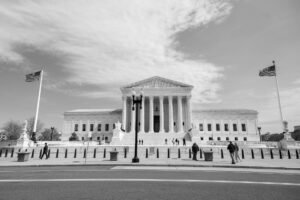
The BCI’s decision follows strong oral observations expressed by the Supreme Court during the hearing of KR Sudersan v. Bar Council of Tamil Nadu and Pondicherry. The court raised concerns about the quality of legal education institutions and the ongoing operation of substandard law colleges. The hearing, which took place on July 20, centered around whether a law graduate could be denied enrollment as an advocate due to a pending criminal case. During the proceedings, BCI’s counsel highlighted the broader issue of enrolling individuals with such cases, but the Supreme Court emphasized the need to address the functioning of law colleges operating under inadequate conditions.
Inspection Guidelines for Universities
The circular instructs universities to conduct thorough inspections of each Centre of Legal Education (CLE) under their jurisdiction. This process should include verifying faculty strength, classroom facilities, libraries, moot court provisions, and fire safety measures. It is crucial that faculty members are physically present and compensated through official banking channels, in compliance with Rule 17 of the Rules of Legal Education, 2008, which prohibits replacing full-time core faculty with part-time or visiting staff.
Additionally, universities must ensure that law colleges do not conduct unauthorized weekend or evening classes for working students, as only full-time courses—a minimum of five hours per day and 30 hours per week—are recognized. Any such unauthorized programs should be immediately discontinued, with no new admissions allowed.
Consequences for Non-Compliance
The BCI’s directive stipulates that law colleges found lacking in compliance should not have their affiliations renewed without addressing deficiencies. Universities are required to categorize each law college as fully compliant, deficient but rectifiable, or severely deficient, necessitating closure or denial of renewal. The BCI will withhold approval renewals until these reports are received.
More Read

Furthermore, universities must acknowledge receipt of the circular within three working days, assign an officer in charge, and list all their CLEs. Should a university fail to meet the six-week deadline for inspection, the issue will be referred to a committee with the authority to take appropriate action.
In a related note, four National Law Universities (NLUs) have been identified with expired BCI approval ahead of the July 31 deadline. The BCI’s proactive measures aim to uphold the quality and integrity of legal education in India.