Supreme Court Criticizes Police Overreach in Protests
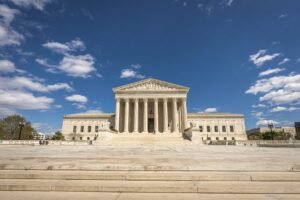
The Supreme Court of India recently emphasized that the right to peaceful protest is a fundamental legal entitlement, and excessive police force in response to such protests is indefensible. During a hearing on Monday in the case of Shailendra Mani Tripathi vs. Union of India and Ors, a Bench including Chief Justice of India (CJI) Surya Kant, and Justices Joymalya Bagchi and V Mohana, underscored the sanctity of individual rights, including those of police personnel.
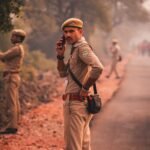
“The right to peaceful protest is undeniably protected. Agitation alone does not justify excessive police measures,” stated CJI Surya Kant. He further advocated for inherent discipline among protestors, which he deemed vital for a thriving democratic society. “Agitation must not automatically lead to measures like lathi charges,” he elaborated.
The Court was considering petitions that called for nationwide guidelines to secure the right to peaceful protests. These petitions arose from recent incidents of police force against demonstrators at Delhi’s Jantar Mantar and in Bihar. Advocate Fauzia Shakil, representing one of the petitioners, highlighted the alarming use of an AK-47 by security forces during a protest in Siwan, Bihar.
Senior Advocate Vikas Singh, also representing the petitioners, stressed the need for a comprehensive national directive, citing numerous student-targeted attacks in Bihar. Meanwhile, representing the perspective of law enforcement, a lawyer pointed out the violence faced by police personnel during protests.
Justice Joymalya Bagchi noted, “The life of every person, regardless of their role, is precious.” CJI Surya Kant remarked on the necessity for a standard protocol, suggesting that peaceful assemblies should be facilitated without restriction, while also managing antisocial elements.
More Read
The Solicitor General Tushar Mehta assured the Court of the government’s willingness to provide unbiased assistance. The Supreme Court has scheduled further hearings on the matter for Tuesday, July 28.
The protests at Jantar Mantar were initiated by the online group Cockroach Janta Party (CJP) in June, calling for the resignation of Union Minister Dharmendra Pradhan due to repeated exam paper leaks. The movement gained traction when climate activist Sonam Wangchuk joined in solidarity, beginning a hunger strike that ended after 26 days due to health concerns.
Despite police warnings against a planned “Sansad Chalo” march to Parliament on July 20, significant numbers gathered, leading to clashes and reports of police deploying lathi charges and tear gas. Following these events, Dharmendra Pradhan resigned on July 25, leading to the cessation of protests.
More Read
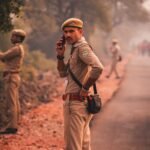
Parallel demonstrations in Bihar have similarly faced severe police actions, causing widespread unrest and dissatisfaction among protestors and their supporters.