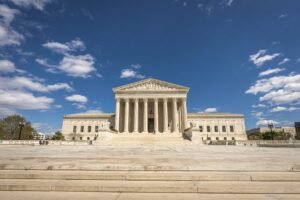
The Supreme Court of India, on Thursday, raised critical questions about the Union government’s role in appointing the Chief Election Commissioner and other Election Commissioners, during a hearing involving the Chief Election Commissioner and Other Election Commissioners (Appointment, Conditions of Service and Term of Office) Act, 2023. The bench, comprising Justices Dipankar Datta and Satish Chandra Sharma, deliberated on petitions challenging this 2023 Act.
Judicial Remarks on Appointments
The bench questioned the notion that judges are responsible for selecting judges in the current context, a remark made in response to arguments presented by Solicitor General Tushar Mehta. Mehta contended that the executive and legislative branches are the only ones directly accountable to the public. The court, however, highlighted concerns about the criminal records of lawmakers and ministers.
Concerns About Panel Composition
Justice Datta expressed concerns over the panel’s composition responsible for selecting Election Commissioners, pointing out that it currently favors the government with two members aligned with it, while only one member represents the opposition. The court remarked on the importance of maintaining fairness, noting that while fairness might be present, it must also be evident to the public.
Legal Challenges to the 2023 Act
The petitions argue that the 2023 Act undermines the constitutional requirement for an independent Election Commission by excluding the Chief Justice of India from the selection process. This challenge draws from the Supreme Court’s 2023 Constitution Bench decision in Anoop Baranwal v. Union of India, which had mandated a selection committee including the Prime Minister, Leader of Opposition, and the Chief Justice of India until Parliament passed a law.
Solicitor General’s Defense
Solicitor General Mehta argued that the Supreme Court’s decision in the Anoop Baranwal case was a temporary measure to fill a legislative gap and questioned whether such a judicial verdict should constrain legislative decisions. He further contended that questioning executive appointments due to lack of an external member in the selection panel undermines the independence of the executive branch.
More Read
Debate on Reference to Larger Bench
Mehta urged for the matter to be referred to a larger bench, citing substantial legal questions. However, the court noted historical delays in such references and suggested proceeding with arguments on the merits. The court expressed willingness to establish a Constitution Bench if needed but highlighted the procedural challenges involved.
Opposition from Petitioners
Advocate Prashant Bhushan, representing the petitioners, opposed the government’s call for a reference, arguing that the issue was settled in prior cases that emphasized the necessity of non-dominance by the executive in the selection process. He asserted that the principle of free and fair elections, potentially compromised by government dominance, had been adjudicated by a Constitution Bench.
Senior advocates Vijay Hansaria and Shadan Farasat echoed these concerns, with Hansaria pointing out the government’s late introduction of the reference argument and Farasat stressing the constitutional mandate for non-executive dominance in Article 324 as interpreted in Anoop Baranwal.
More Read

Court’s Next Steps
The court reserved its decision on whether to refer the matter to a larger bench but requested written arguments from the involved parties. The decision on this critical issue remains pending as the Supreme Court continues to deliberate on the implications of the 2023 Act on the independence of the Election Commission.