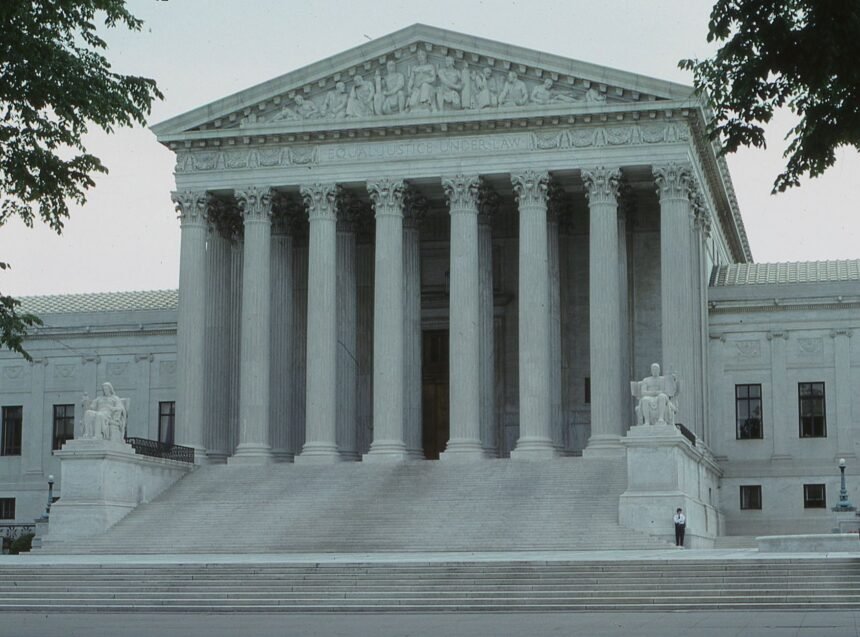
Supreme Court Issues Stay on CIC’s 2007 Ruling
The Supreme Court of India has temporarily halted a 2007 decision by the Central Information Commission (CIC) that classified the National Stock Exchange of India (NSE) as a public authority under the Right to Information Act (RTI Act). This stay comes as the NSE appeals a Delhi High Court decision affirming the CIC’s ruling. The interim order was issued by a Bench comprising Justices Vikram Nath and Sandeep Mehta, who have also issued a notice regarding NSE’s appeal.
Background of the Case: CIC’s 2007 Decision
In a landmark decision, the CIC had declared stock exchanges, including the NSE, as public authorities under Section 2(h) of the RTI Act, requiring them to establish a mechanism for processing RTI applications. This decision was upheld by the Delhi High Court, prompting the NSE to seek relief from the Supreme Court.
Supreme Court Observations on Transparency
During the proceedings, the Supreme Court acknowledged the growing significance of transparency in public and corporate affairs. While issuing the stay, the Court remarked on the temporary nature of the protection currently afforded to the NSE against the CIC order, suggesting it might not last indefinitely.
Judicial Journey: From CIC to Supreme Court
The legal tussle began in 2007 when the CIC classified stock exchanges under the RTI Act. The NSE challenged this before the Delhi High Court and initially secured an interim stay. However, in 2010, Justice Sanjiv Khanna dismissed the NSE’s petition, ruling that despite its private company status, the NSE’s recognition under the Securities Contracts (Regulation) Act, 1956, amounted to it performing public functions.
Subsequently, the NSE’s appeal to a Division Bench resulted in a stay on the single-judge decision, which remained pending for 16 years. On July 1, 2023, a Division Bench comprising Justices C Hari Shankar and Om Prakash Shukla reaffirmed Justice Khanna’s decision, emphasizing the NSE’s dependence on recognition from the Securities and Exchange Board of India (SEBI) and the extensive government control over the exchange.
More Read

NSE’s Argument Against Public Authority Status
In its defense, the NSE argued that it is a privately held company with no government ownership, with approximately 40% of its shares owned by domestic investors and 27% by foreign investors. The NSE cited the Supreme Court’s ruling in Thalappalam Service Cooperative Bank Limited v. State of Kerala, asserting that it does not meet the criteria under Section 2(h) of the RTI Act for classification as a public authority.
Legal Representation
The NSE’s legal team included Solicitor General Tushar Mehta and Senior Advocate Balbir Singh, who represented the exchange in the Supreme Court.