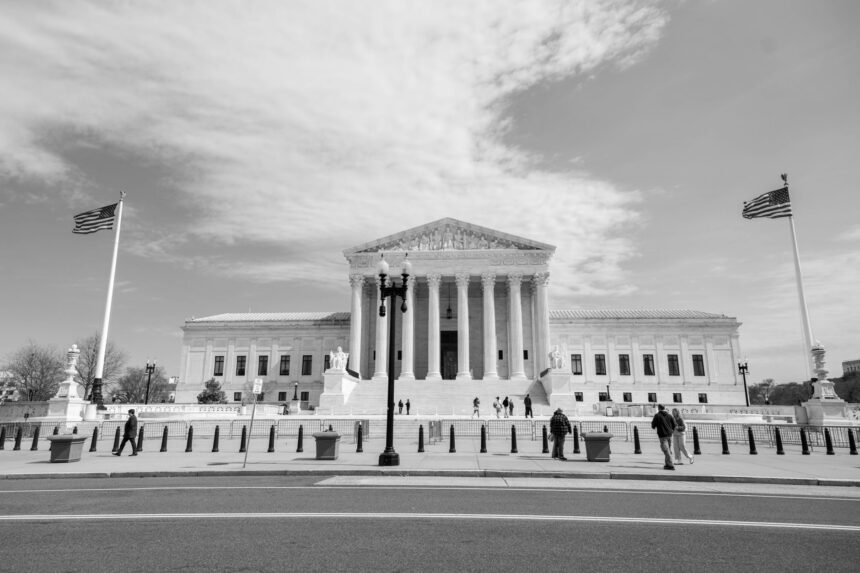
Supreme Court Addresses Petition on Demolition Policy
The Supreme Court of India, on Wednesday, opted not to proceed with a petition advocating for a nationwide uniform policy concerning the regularisation and demolition of longstanding unauthorized constructions. A bench led by Chief Justice of India Surya Kant, alongside Justices Joymalya Bagchi and V Mohana, determined that such matters primarily belong in the policy domain, thereby refusing to establish a court-empowered committee to create standardized guidelines.
State-Specific Policies Preferred
The Court emphasized that the circumstances surrounding unauthorized constructions differ greatly across states, necessitating distinct policy frameworks tailored to each state’s unique situations. “It would be challenging and perhaps unwise for this Court to prescribe a uniform policy applicable to all states,” the bench remarked.
However, the Court invited states and union territories to examine the issues highlighted in the petition by the Centre for Law and Good Governance, suggesting they might reconsider or update their policies accordingly. “We are optimistic that these concerns will be duly considered by the relevant authorities,” the Court stated.
Petitioner’s Concerns and Arguments
The petition, brought forth by the Centre for Law and Good Governance, pointed out that although states like Andhra Pradesh, Telangana, and Delhi have introduced settlement and regularisation policies, instances of sudden demolitions of unauthorized colonies persist, often carried out without notice or rehabilitation plans for affected residents.
The plea argued that demolition, being a drastic and irreversible action, should not proceed absent a policy that balances planning law enforcement with the rights to shelter, livelihood, and dignity as enshrined in Article 21 of the Constitution. Counsel for the petitioner highlighted the inconsistency in state policies, noting, “On one hand, they assure residents that unauthorized structures will be regularized. After decades, they suddenly deem these structures illegal and demolish them, overlooking alternative accommodations for occupants.”

Judicial Perspectives and Human Rights
Chief Justice Kant acknowledged the existing comprehensive directions against illegal demolitions issued by the Court, though the counsel argued these directions were contradictory and required a human perspective. “In one instance, a bench affirmed the right to shelter as part of living with dignity, yet another ruling dismissed long-standing existence as a right.”
The Court reiterated that a judicially empowered committee could not replace state or municipal authority in enforcing the law, noting prior court instructions to avert sudden demolitions. “Our jurisprudence, beginning with Olga Tellis, ensures no dispossession without due process. Unauthorized occupants must receive at least 15 days’ notice before demolition,” CJI Kant articulated.
State Obligations and Policy Decisions
Justice Bagchi stressed that issues should be resolved on a case-by-case basis rather than through a blanket policy. Even as the counsel questioned the state’s duty to provide alternative accommodations, Justice Bagchi cautioned against the Court overstepping into the executive’s policy domain.
More Read

Recognizing that some illegal constructions are profit-driven, the Court acknowledged that states must establish their policies. “In situations where economically marginalized groups occupy land, policy decisions are essential. We can’t prevent states from adopting specific policies,” Justice Bagchi explained.
Ultimately, the Court encouraged the government to consider the petitioner’s suggestions, while refraining from mandating any specific actions.