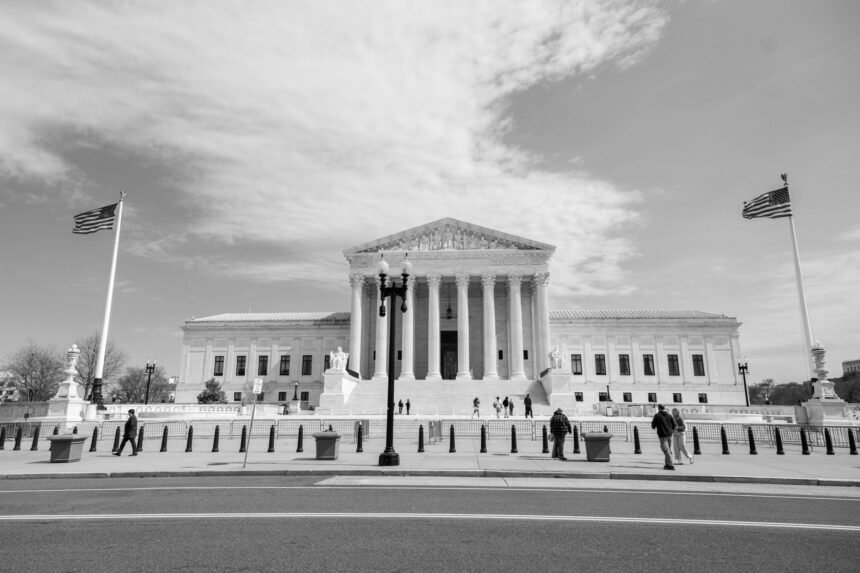
The Supreme Court of India has mandated an investigation by the Central Bureau of Investigation (CBI) into the custodial death of a man from Chhattisgarh, who passed away four days following his arrest for allegedly possessing six litres of raw Mahua liquor. This directive comes from a Bench comprising Justices Vikram Nath and Sandeep Mehta, in the case of Lahra Bai Tamre & Ors. v. State of Chhattisgarh & Ors.
Failure of State Authorities
The Bench found a significant lapse on the part of State authorities in not registering a criminal case, despite the conclusions of a judicial inquiry into the death of the deceased, Shravan. The Supreme Court rejected the explanation provided by State officials, which claimed that no action was taken because the judicial inquiry report had not been received by the police. The Court described the State’s stance as a “cover-up” attempt to mislead the judicial process.
CBI Investigation Ordered
In its ruling, the Court directed the CBI to immediately file a criminal case and conduct a thorough investigation into both the circumstances of the custodial death and the role of State officials who failed to act appropriately. “We are of the firm opinion that the ends of justice require that the investigation into the circumstances leading to the custodial death of Shri Shravan (Deceased) be entrusted to the CBI and that all officials found responsible for the custodial violence, upon completion of the investigation, be proceeded against and prosecuted in accordance with law,” stated the Court.
Interim Compensation and Judicial Findings
Furthermore, the Chhattisgarh government was instructed to pay ₹25 lakh as interim compensation to Shravan’s family, recognizing that he was the primary breadwinner and had died under unnatural circumstances while in custody. Shravan was apprehended on January 18, 2024, under the Chhattisgarh Excise Act and detained at Bilaspur central jail. His condition worsened, leading to his admission at CIMS Hospital on January 21, where he succumbed the following day.
The post-mortem report highlighted multiple injuries, including a laceration on his scalp and contusions on his thigh and neck. The cause of death was identified as cardio-respiratory arrest due to complications from a head injury caused by a hard, blunt object. A judicial inquiry conducted under Section 176 of the Code of Criminal Procedure concluded that the death was linked to complications from the head injury.

Legal Proceedings and Criticism of State Response
After no actions ensued, Shravan’s wife and daughters approached the Chhattisgarh High Court, seeking ₹50 lakh in compensation and action against the responsible officials. Although the High Court acknowledged that Shravan died due to custodial violence, it only awarded ₹1 lakh compensation without mandating an FIR. Subsequently, the family approached the Supreme Court.
The Director General of Police (DGP) of Chhattisgarh claimed before the Supreme Court that no criminal case was registered due to the absence of the judicial report. The Supreme Court dismissed this defense as untenable, pointing out that the State had informed the High Court of the ongoing judicial inquiry and awaited its report.
Supreme Court’s Condemnation and Further Directions
The Supreme Court labeled the DGP’s position as “patently false and wholly reprehensible.” It emphasized that the injuries, as documented in the post-mortem report, indicated that they had occurred over the duration of Shravan’s custody. Consequently, the Court ordered the immediate registration of an FIR concerning the custodial death, condemning the State’s attempt to “conveniently and deliberately” obscure the facts.
More Read

The Court also tasked the CBI with examining the conduct of State officials who failed to act following the judicial inquiry report. The investigating officer is expected to present the probe findings to the Supreme Court by the following hearing on October 13. Additionally, the Chhattisgarh DGP must send the complete case records to the CBI Director through a special messenger within one week.