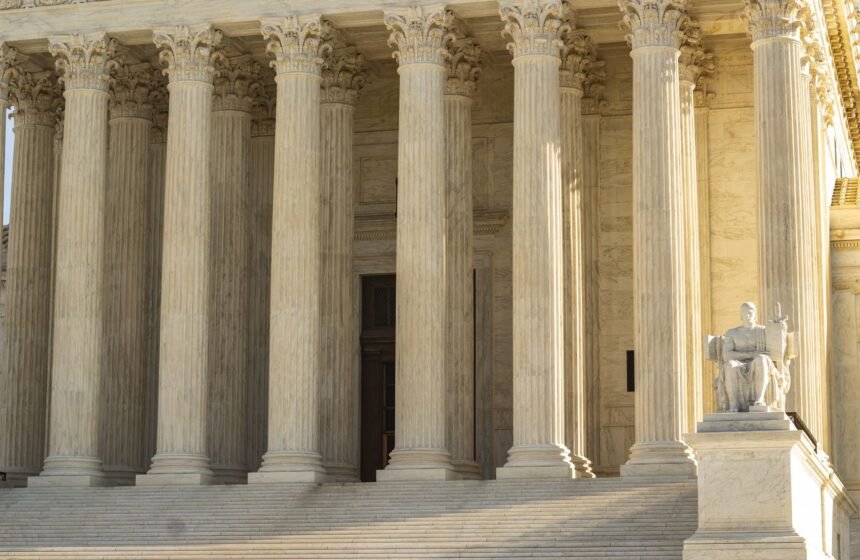
Supreme Court Revises ‘Industry’ Definition in Landmark Ruling
In a pivotal decision, a nine-judge bench of the Supreme Court of India, by a narrow 5:4 majority, has revised the interpretation of ‘industry’ as defined in the seminal 1978 judgment in the Bangalore Water Supply & Sewerage Board (BWSSB) v. R. Rajappa & Others case. This judgment, delivered by a Constitution Bench led by Chief Justice of India (CJI) Surya Kant, along with Justices BV Nagarathna, PS Narasimha, Dipankar Datta, Ujjal Bhuyan, Satish Chandra Sharma, Joymalya Bagchi, Alok Aradhe, and Vipul M Pancholi, marks a significant development in labor law.
Historical Context and Judgment Details
The Court, after reserving its judgment on March 19 following extensive hearings, has determined that certain aspects of the ‘triple test’ established in the original BWSSB case needed refinement. However, the core principles of the test have been upheld. CJI Kant, while announcing the verdict, emphasized the necessity to articulate some elements differently to better align with Section 2(j) of the Industrial Disputes Act.
Importantly, the revised interpretation will apply only to future cases and not to ongoing disputes. The existing triple test from the BWSSB case will continue to govern pending matters under the now-repealed Industrial Disputes Act of 1947. Furthermore, the Court has opted not to address the new ‘industry’ definition under the Industrial Relations Code of 2020.
Legal Reasoning and Dissenting Opinions
The original 1978 judgment had broadly defined ‘industry’ to include systematic activities involving organized cooperation between employers and employees, aimed at producing or distributing goods and services. This inclusive definition was challenged in State of Uttar Pradesh v. Jai Bir Singh, leading to the current review.
Justice BV Nagarathna, dissenting, argued against the need to revisit the 1978 definition, advocating for its wide interpretation. She contended that governmental functions should not be automatically exempt from being considered as industries.

Justices Dipankar Datta and Ujjal Bhuyan also dissented, questioning the necessity of revisiting a decision that had been a cornerstone of labor jurisprudence for decades. They emphasized the importance of legal finality and institutional credibility.
Justice Joymalya Bagchi, while agreeing that the reference was maintainable, disagreed with the majority’s reformulation of the triple test, supporting the original broad interpretation.
Arguments and Observations
During the proceedings, Attorney General R Venkataramani, representing the Union, acknowledged the validity of the triple and dominant nature tests but criticized their expansive application. He called for a more nuanced approach, particularly for governmental functions.
More Read

Contrarily, Senior Advocate Indira Jaising argued against revisiting the established definition, emphasizing the Industrial Disputes Act’s role in providing workers access to remedies unavailable in civil courts. She cautioned against making ‘commercial motive’ a criterion for defining industries.
The Bench, assisted by Senior Advocates JP Cama and Parthasarathi Sengupta, has thus laid the groundwork for how ‘industry’ will be interpreted in future legal contexts, with significant implications for labor and employment law in India.