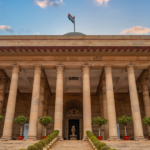
The National Company Law Tribunal (NCLT) has issued a ruling drastically reducing the financial liabilities of Essel Group’s founder, Subhash Chandra, in an ongoing insolvency case. Under the tribunal-approved repayment plan, creditors are set to recover merely 0.028% of their original claims, translating to a haircut of approximately 99.97%, or nearly ₹22,000 crore.
Background of the Case
Subhash Chandra’s insolvency proceedings were initiated by Indiabulls Housing Finance Limited (now Sammaan Capital) in 2022, due to his role as a personal guarantor for a ₹170 crore loan extended to Vivek Infracon. Following the loan’s default, Indiabulls filed a plea under Section 95 of the Insolvency and Bankruptcy Code (IBC) with the NCLT, which was admitted in 2024.
Conflicting Opinions and Final Ruling
Earlier this year, the case reached an impasse when Judicial Member Ashok Kumar Bhardwaj and Technical Member Reena Sinha Puri expressed differing views on the repayment plan. Bhardwaj supported the plan’s approval, while Puri raised concerns about its legal and procedural soundness. To resolve the deadlock, a third Judicial Member, Nilesh Sharma, was appointed.
On August 25, Sharma ruled in favor of approving the plan, allocating ₹6.25 crore to creditors against admitted claims of approximately ₹22,006.57 crore. An additional ₹25 lakh was designated for insolvency resolution process costs. Sharma emphasized that the repayment plan should be approved under Section 114 of the IBC, 2016, and instructed the Resolution Professional (RP) to exclude certain unsupported claims filed by creditors Anil Kumar and Sunil Jain, affecting about 1,260 individuals. The redistributed amount will then be shared among the remaining eligible creditors.
Objections and Legal Challenges
Several banks and financial institutions, including LIC Housing Finance, opposed the plan, citing the negligible recovery and questioning the legitimacy of the claims and the participation of entities allegedly linked to Chandra. LIC argued it would receive only ₹38.09 lakh against its claim of ₹1,322.39 crore, and described the ₹6.5 crore recovery as uncertain.

Creditors also presented net-worth certificates indicating Chandra’s net worth was ₹45,888 crore in 2017 and ₹40,562 crore in 2018, with a current estimate of ₹31.79 crore. These objections led to the referral of the case to a third NCLT member, as per Section 419(5) of the Companies Act, 2013.
Court’s Justification
Member Sharma noted that the claims by Anil Kumar and Sunil Jain lacked supporting documentation, which was a lapse by the RP but not severe enough to nullify the repayment plan. Additionally, he rejected the claim that entities such as Veena Investments Private Limited and others were Chandra’s associates under Section 79(2)(g) of the IBC, ruling that mere business or familial ties do not suffice for exclusion.
The plan is binding on all creditors, including dissenters or abstainers, under Section 115 of the IBC. The matter will now return to the original NCLT bench for a formal order based on the majority opinion.
More Read
Subhash Chandra’s legal team included advocates GP Madaan, Aditya Madaan, and Rahul Narula, while the Resolution Professional was represented by advocate Sajeve Deora. Other involved parties included legal representatives for World Crest Advisors LLP and Canara Bank.