Calcutta High Court Seeks Clarity on Mosque Loudspeaker Removal
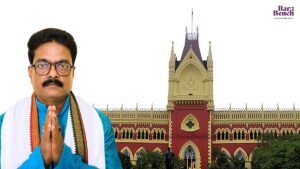
The Calcutta High Court has inquired whether the State government of West Bengal has taken steps to remove loudspeakers from mosques. This query arose during a session on Thursday when the Division Bench, led by Acting Chief Justice Tapabrata Chakraborty and Justice Atarup Banerjee, deliberated over a public interest litigation (PIL). The PIL challenges what are claimed to be police directives instructing religious institutions to dismantle loudspeakers from their premises.
The court directed Advocate General (AG) Surajit Nath Mitra to inform whether any actions have been undertaken by state authorities regarding the removal of loudspeakers. Mitra requested time to gather instructions and asked the court to reschedule the matter for the following week. The court has set the next hearing for August 18.
The PIL, filed by advocate Danish Farooqui, contests the “blanket verbal directions” issued by police in Hooghly and other districts, targeting religious sites, including mosques and temples, for loudspeaker removal. The plea argues that these police actions lack any formal written orders, notifications, or legal backing. It further claims that these actions are executed without measuring the decibel levels to determine if there is any breach of the Noise Pollution (Regulation and Control) Rules, 2000.
According to Farooqui, the ‘azaan’ (call to prayer) is a fundamental component of Islamic practice, safeguarded under Article 25 of the Indian Constitution. Therefore, a blanket prohibition infringes upon a fundamental right. Representing Farooqui, Senior Advocate Kalyan Bandyopadhyay asserted that police officers coerced mosque managements into removing loudspeakers from approximately 4000 mosques without issuing formal notices.
“It has become a norm where written orders are not served,” Bandyopadhyay stated. He emphasized that the law permits the use of loudspeakers within acceptable decibel levels, advocating for adherence to regulations and previous court directives.

However, the court highlighted the need to scrutinize the State’s position on the petitioner’s allegations before considering any interim measures. Responding to this, AG Mitra argued that the petition should be dismissed with costs, noting that the petition lacks evidence of the alleged directives and does not mention specific mosques affected by the loudspeaker removal.
“Can the court proceed on this? Not a single name,” Mitra challenged, adding that the petitioner must substantiate claims that any officer visited a mosque for loudspeaker removal. “Not a single imam has come forward. Who is saying? The petitioner claims ‘I have come to know’. Some responsibility must be shouldered,” he argued. The court, acknowledging this point, requested the AG to address the allegations directly.
“Is this your contention that this is absolutely false?” questioned Justice Chakraborty. Mitra indicated he would need to consult with relevant authorities to provide a detailed response. Additional Advocate General Billwadal Bhattacharyya also represented the State in this matter.