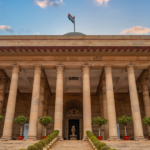
The Delhi High Court has sharply criticized the Enforcement Directorate (ED) for its handling of a money laundering investigation involving the family of the late Dr. Mahendra Prasad, a prominent Rajya Sabha MP and founder of Aristo Pharmaceuticals. The case, which hinges on complex family disputes over Prasad’s vast estate, was scrutinized after the ED attempted to extend its Enforcement Case Information Report (ECIR) by adding an older FIR, following the closure of the initial FIR by a lower court. This move was perceived as an attempt to prolong the investigation under the Prevention of Money Laundering Act, 2002 (PMLA).
Case Background
The controversy began with a 2021 FIR that accused certain individuals of forging the signature of Prasad’s widow, Satula Devi, to misappropriate shares and bank assets. The ED used this FIR as the predicate offence for their ECIR. However, the Economic Offences Wing (EOW) later determined that no forgery had occurred, supported by a forensic report. Consequently, a magistrate court accepted the EOW’s findings and closed the FIR in June 2025. A protest petition challenging this closure was also dismissed.
ED’s Controversial Decision
Despite these events, approximately two months later, the ED issued an addendum to incorporate a separate FIR from 2019, which related to allegations against Uma Devi, a long-time associate of Prasad, involving wrongful confinement and property misappropriation. The High Court, presided over by Justice Anish Dayal, found this move legally and procedurally flawed, emphasizing that the ED’s actions seemed aimed at maintaining the ECIR’s validity to retain its investigative powers under the PMLA.
Judicial Findings
Justice Dayal highlighted the lack of a direct connection between the two FIRs, noting that they involved different individuals and circumstances, apart from having a common complainant. The court found the ED’s extension of the ECIR through the 2019 FIR as “illegal, procedurally improper, and irrational.” It thus quashed the proceedings stemming from the ECIR, underscoring that the foundational basis for the ECIR had lapsed with the closure of the 2021 FIR.
Implications and Legal Precedents
The judgment also clarified the High Court’s jurisdiction in entertaining civil writ petitions against ECIRs and related proceedings under the PMLA. Justice Dayal cited the Supreme Court’s ruling in Vijay Madanlal Choudhary, affirming that an ECIR is merely an internal document and not equivalent to a police investigation under the Code of Criminal Procedure (CrPC). Hence, civil challenges to ED’s proceedings under PMLA’s civil domain are valid before the High Courts.

Legal Representation
The case saw representation from notable legal professionals. Senior Advocates N Hariharan, Siddharth Agarwal, and Dayan Krishnan appeared for the petitioners, while Senior Advocate Vikas Singh represented the complainant, Satula Devi. The intervenor, Rajeev Sharma, was represented by Senior Advocate Mahesh Jethmalani. The ED’s legal team included Special Counsel Anurag Jain.