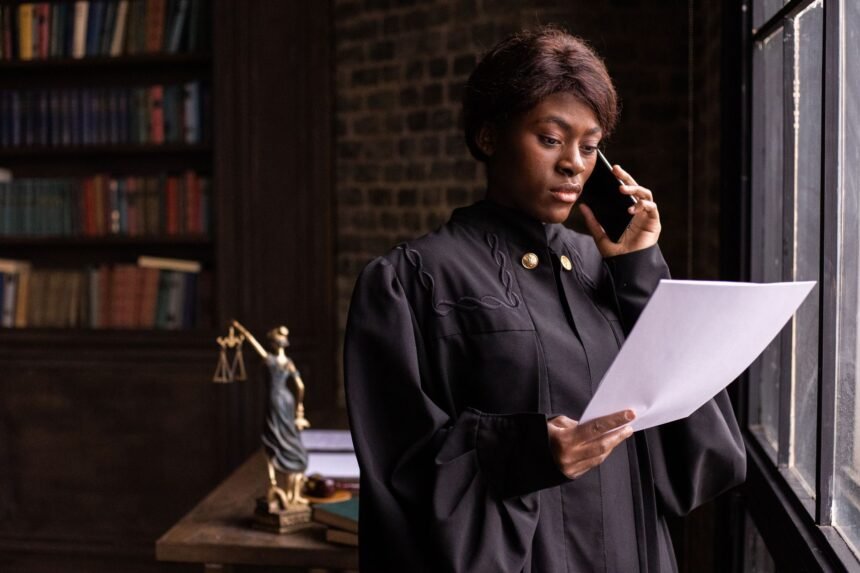
In a thought-provoking address at the National University of Advanced Legal Studies (NUALS) seminar, Supreme Court Justice V Mohana highlighted the intriguing parallels between law, music, and cinema. Speaking on Friday, Justice Mohana emphasized that all three disciplines require interpretation and understanding of human experiences within their unique frameworks.
Justice Mohana drew a fascinating comparison between the structured rules of music and the legal framework, noting that just as music relies on rhythm, harmony, and structure, law operates within the boundaries set by the Constitution, legislation, and procedural rules. “Law is not entirely different; the Constitution, legislation, and procedure give us our framework, they tell us where the boundaries are,” remarked Justice Mohana, adding that judges constantly perform the delicate task of interpreting the law faithfully while acknowledging the ever-evolving world it governs. Behind every case, she noted, is a person and a unique human experience.
The seminar, titled ‘Three-day Seminar on Music, Cinema and Law: Exploring the Intersections of Art, Culture and Law,’ was inaugurated by Kerala Chief Minister VD Satheesan at the Bolgatty Palace in Kochi. The event was a joint effort by the Kerala Judicial Academy and NUALS. It brought together a diverse audience, including Kerala High Court Chief Justice Soumen Sen, Justice Anil K Narendran, Minister of Higher Education Roji M John, along with judges, lawyers, academics, and members of the creative community. The opening ceremony featured a classical dance performance, ‘Navarasa,’ by Kerala Kalamandalam.
Justice Mohana admitted initial skepticism over what a judge could contribute to discussions about music and cinema. However, she soon realized the commonalities between these fields. “The more I thought about law, music, and cinema, the more I realized that perhaps these three worlds are not strangers to each other,” she explained.
Another significant topic addressed was the impact of Artificial Intelligence (AI) on the arts and legal systems. Justice Mohana raised pertinent questions about AI’s role in creativity, noting that AI can replicate voices, faces, and even generate music. She highlighted the complexity AI introduces, questioning where inspiration ends and imitation begins, and when technology assists versus replaces artists. Justice Mohana called for collaboration among artists, technologists, historians, and legal experts to tackle these challenges and protect creativity while fostering innovation.
More Read
During his remarks, Chief Minister VD Satheesan emphasized the necessity for the legal framework to evolve with technological advancements, particularly with AI’s influence on creative rights. He stressed the importance of adapting copyright, intellectual property, and anti-piracy laws to safeguard against emerging threats.
Chief Justice Soumen Sen likened a musician’s interpretation of a composition to a judge’s interpretation of legal texts, emphasizing the balance between fidelity to the original and the need for contextual understanding. Justice Anil K Narendran echoed the sentiment, urging a careful examination of whether current legal frameworks adequately protect artistic rights amid technological advancements, ensuring progress does not come at the expense of human creativity.