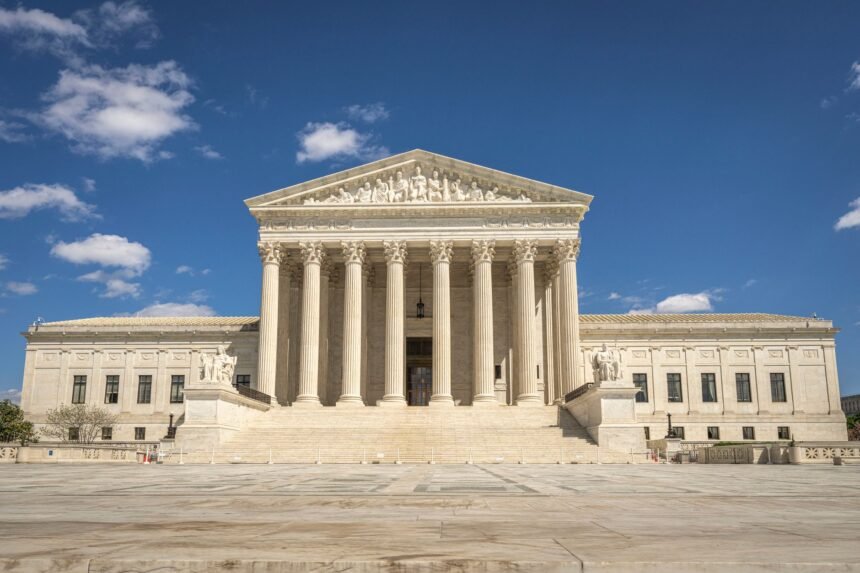
Supreme Court Evaluates Cauvery River Water Distribution
The Supreme Court has recently observed that Tamil Nadu might be receiving more water from Karnataka’s Cauvery River than its entitled share. This conclusion was shared by a bench comprising Justices Vikram Nath and Sandeep Mehta during a hearing of Tamil Nadu’s appeal concerning its water allocation from Karnataka.
Allegations and Court Observations
Tamil Nadu has claimed that it is not receiving its rightful share of water from Karnataka, despite experiencing a year with insufficient rainfall. However, the Supreme Court noted, “Instead of 9.720, if you add the total, you already have more than that. Earlier also they [Karnataka] have released much more water.” The court has postponed further hearings but emphasized that Karnataka must adhere to the directives of the Cauvery Water Management Authority (CWMA) to release water to Tamil Nadu.
Arguments and Counterarguments
According to Tamil Nadu’s representation, the water released by Karnataka, as advised by the Cauvery Water Regulation Committee (CWRC), has not met the state’s needs. Counsel for Tamil Nadu stated, “The total water received by TN is just 14.814 TMC. 64 TMC should have come. The proportionate quantity should be 35 TMC. There is a backlog of 20 TMC. The direction is we should get at the rate of 12,000 cusecs per day.”
In counter, Senior Advocate Shyam Divan, representing Karnataka, highlighted that the current water levels in the Cauvery River are significantly low. “The Cauvery water management authority is alive to the situation,” he argued. “It has passed two directions. Not only was 3,500 cusecs assured but it was substantially exceeded. The primary contention that we are not complying with CWMA order is false.” Divan further noted that water flow to Tamil Nadu had surpassed 12,000 cusecs as of the morning in question.
Future Proceedings
The court has scheduled the next hearing for the following week to further investigate the water-sharing status between the two states. “Both counsel have placed fact sheets before us. We have examined the same. We feel that let it be posted after a week so that further status regarding release may be placed before this court. Ensure compliance of CWMA directions,” the court remarked.

Historical Context of the Dispute
The longstanding conflict between Karnataka and Tamil Nadu over Cauvery water dates back to agreements made in 1892 and 1924 between the Madras Presidency and the Princely State of Mysore. Despite the Supreme Court’s intervention and the establishment of the Cauvery Water Disputes Tribunal in 2007, disputes persist as both states have sought reviews of decisions. In 2016, Tamil Nadu approached the Supreme Court again when Karnataka expressed its inability to share further water from its reservoirs. This led the court to instruct the Central government to establish a Cauvery Management Board (CMB).
The Supreme Court also rejected a 2023 plea by Tamil Nadu to increase its daily water share from 5,000 to 7,200 cusecs. Another water-sharing conflict involving the Pennaiyar River is currently pending before the Supreme Court, with Tamil Nadu filing an original suit against Karnataka and the Central government.