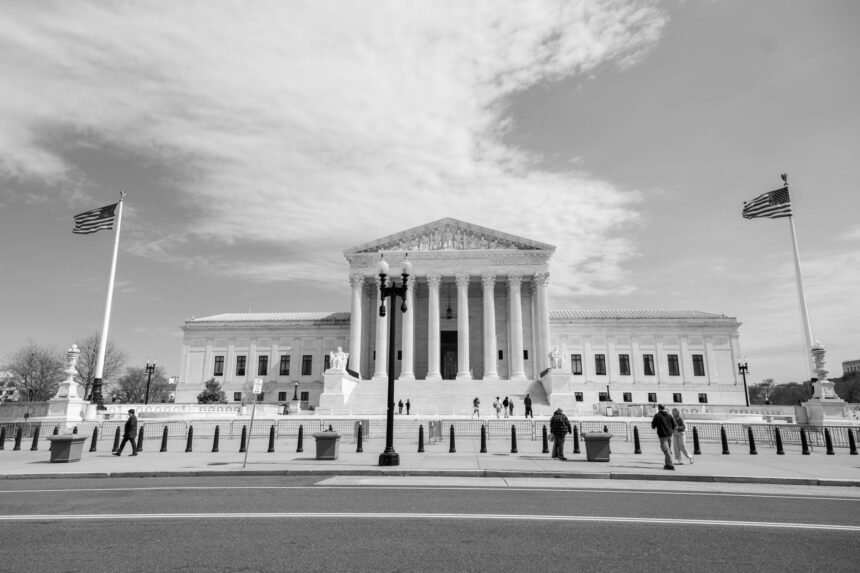
The Supreme Court of India has called for responses from the Central government as well as state governments regarding a significant public interest litigation (PIL) petition. This petition seeks the confiscation of both movable and immovable properties of individuals involved in paper leak offenses, including those indirectly implicated, such as family members. The case, titled Ashwini Kumar Upadhyay v. Union of India and Others, was brought before a bench comprising Justices PS Narasimha and Alok Aradhe.
The plea was presented by Ashwini Kumar Upadhyay, a Bharatiya Janata Party (BJP) leader and legal advocate, who is advocating for more stringent measures against paper leak offenders. Upadhyay is pushing for a legal framework that mandates consecutive sentences for those found guilty in paper leak cases, rather than concurrent sentences.
In addition to the confiscation proposal, the plea calls for a thorough evaluation of properties owned by offenders and their families, recommending actions under various legal provisions such as the Prevention of Corruption Act, the Prevention of Money Laundering Act, the Prohibition of Benami Property Transactions Act, and the Black Money Act.
During the hearing, Upadhyay informed the Court that he was no longer pursuing an initial request for the creation of a standard questionnaire and a specialized investigative procedure. This change of course was due to the recent enactment of the Public Examinations (Prevention of Unfair Means) Amendment Bill, 2026, which has fortified existing laws against paper leaks. “I am not pressing prayer (a), since a law has now been enacted. Prayers (b), (c), and (d) survive. This is not an adversarial petition, My Lords,” Upadhyay submitted.
The bench subsequently issued a notice on the remaining prayers. The petition argues that the failure of authorities to adequately prevent, investigate, and prosecute paper leaks constitutes a violation of fundamental rights under Articles 14, 16, and 21 of the Indian Constitution. It highlights the financial burdens, loss of opportunities, and psychological distress inflicted on candidates and their families due to recurring paper leaks.

Furthermore, Upadhyay has requested that the Law Commission of India examine international best practices and provide a comprehensive report within three months, suggesting effective strategies to combat paper leaks. The Supreme Court is expected to revisit this matter on September 25, 2026.