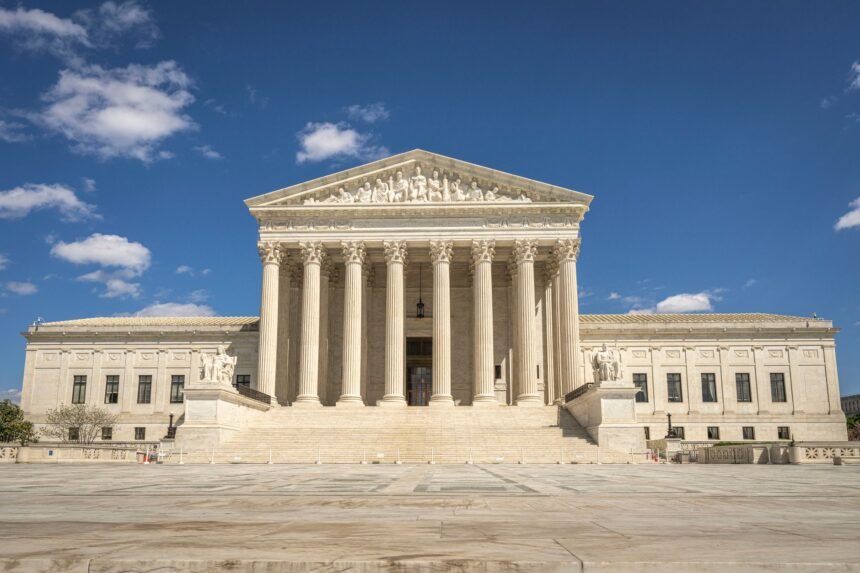
The Supreme Court of India has recently dismissed a review petition challenging its landmark judgment from March 2026, which held that individuals lose their Scheduled Caste (SC) status upon converting to a religion other than Hinduism, Sikhism, or Buddhism. The case in question is Chintada Anand v. State of Andhra Pradesh & Ors.
The bench, composed of Justices Prashant Kumar Mishra and Manmohan, carefully reviewed the petition and reiterated their stance, finding no reason to alter the original decision. The bench stated, “We have gone through the review petition and perused the judgment dated 24.03.2026 which has been sought to be reviewed. There is no error apparent on the record.” The court also denied the petitioner’s request for an oral hearing.
Conditions for Reclaiming Scheduled Caste Status
The March 2026 ruling clarified that conversion to Christianity or any religion outside of Hinduism, Sikhism, and Buddhism results in the immediate loss of Scheduled Caste status. However, the court indicated that individuals could potentially reclaim this status upon reconversion, provided they meet three specific conditions:
- They must prove their original birth into a caste recognized as a Scheduled Caste.
- They must demonstrate genuine reconversion to Hinduism, Sikhism, or Buddhism, along with a complete renunciation of the previously adopted religion.
- They must establish acceptance by members of their original caste community upon reconversion.
Failure to meet any of these conditions would make the claim unsustainable, the court emphasized.
Background of the Case
The case originated when a man from Andhra Pradesh, originally born into a Scheduled Caste but later converted to Christianity and working as a pastor, filed a First Information Report (FIR) under the Scheduled Castes and Scheduled Tribes (Prevention of Atrocities) Act. He alleged that he had been subjected to caste-based abuse and threats. The accused challenged the FIR in the Andhra Pradesh High Court, which subsequently quashed the FIR on the grounds that the complainant, having converted to Christianity, could not legally claim Scheduled Caste status.
More Read

The complainant then appealed to the Supreme Court, which, in its March judgment, upheld the High Court’s decision. The Supreme Court ruled that individuals professing Christianity could not avail themselves of protections under the SC/ST Act, as Scheduled Caste status is reserved only for those practicing Hinduism, Sikhism, or Buddhism. However, the court provided that reconversion to one of these religions could allow a person to reclaim SC status, contingent upon fulfilling the three outlined conditions.
With the dismissal of the review petition, the Supreme Court’s March 2026 verdict remains authoritative, reinforcing the legal framework around Scheduled Caste status and religious conversion.