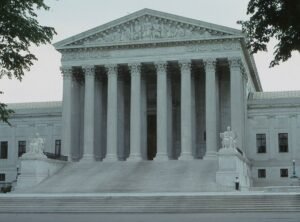
The phrase “The report is taken on record. It shall remain in a sealed cover” has become a familiar procedural routine in the Supreme Court of India. However, this practice raises a crucial constitutional question: when is it appropriate for courts to allow secrecy, and when does this secrecy become an impediment to justice?
Understanding the Use of Sealed Covers
Legal systems globally acknowledge the necessity to protect certain information. The challenge arises when confidentiality becomes the norm rather than the exception. Over the past decade, sealed covers have featured in significant cases such as those involving black money, Rafale, Pegasus, Adani, and Vantara, each citing justifications like national security, treaty obligations, privacy, or regulatory confidentiality. The constitutional query is not the legitimacy of these grounds, but whether the Supreme Court has applied them consistently, proportionately, and with adequate reasoning.
This issue gained prominence following the Court’s landmark decision in Madhyamam Broadcasting Ltd. v. Union of India (MediaOne).
The MediaOne Test
The sealed cover debate starts with the law, specifically Order XIII Rule 7 of the Supreme Court Rules, 2013, which permits withholding copies of confidential material. However, the Rule lacks a detailed framework to determine when secrecy is necessary, how much material should stay confidential, or the duration of such confidentiality. This omission is constitutionally significant because secrecy conflicts with the foundational principles of natural justice and open justice.
The Supreme Court’s 2023 judgment in the MediaOne case highlighted these concerns. The Kerala High Court had relied on material presented in a sealed cover by the Union government while upholding the denial of security clearance to the news channel. The Supreme Court criticized this practice, emphasizing that undisclosed material can undermine natural justice and open justice, and stressed exploring less restrictive alternatives to complete non-disclosure.
More Read

Examining Notable Sealed Cover Cases
The black money litigation illustrates why secrecy must be balanced against public interest. In Ram Jethmalani v. Union of India, the Court dealt with allegations of unaccounted money in foreign banks. The Union submitted material in sealed covers during the proceedings, and the Court later directed the material to be shared with the petitioners. However, the SIT’s report on black money, submitted in a sealed cover, remained undisclosed, prompting questions about transparency and accountability.
The Rafale case introduced national security as a justification for secrecy, involving the procurement of Rafale fighter jets. The Court reviewed confidential information in a sealed cover but declined further investigation, underscoring the challenge of balancing national security with public scrutiny.
The Pegasus controversy exemplified the limits of sealed cover secrecy, with allegations of state surveillance using spyware. The Supreme Court appointed an independent committee to investigate, recognizing the need for transparency in the face of potential state overreach.

In the Adani-Hindenburg proceedings, the sealed cover issue arose again, with the Court relying on an expert committee’s findings without public access to underlying evidence. Similarly, the Vantara case involved confidential investigations into allegations against a corporate entity, raising concerns about public scrutiny and accountability.
The Constitutional Test for Sealed Covers
Sealed covers are not inherently problematic, but secrecy should not be automatic. The Court must evaluate whether the information is genuinely confidential, if secrecy is necessary, whether redaction or summaries could suffice, and if secrecy denies the public or opposing parties a fair examination of the Court’s reasoning.
Ultimately, the distinction between protecting a secret and shielding decisions from scrutiny is critical. The former may sometimes be justified, but the latter should never occur.
Conclusion
The issue is not the use of sealed covers per se, but the tendency for secrecy to become a habitual excuse. Major cases like Black Money, Rafale, Pegasus, Adani, and others have shown how sealed covers can obscure public understanding. The ongoing Ram Mandir donation theft investigation and Jantar Mantar March inquiry exemplify the persistent challenges of transparency in politically sensitive cases.
Sealed covers should be the exception, not the rule. The key question remains: is it protecting something that genuinely needs protection, or is it shielding someone from scrutiny? If it is the latter, it is no longer a shield for justice but a shield from justice.