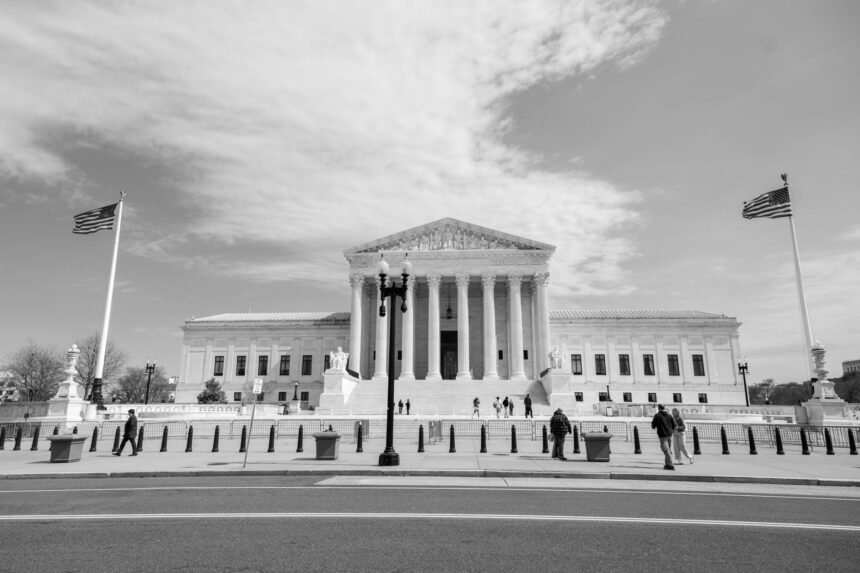
In a significant legal development, ten elected members of the Uttarakhand Bar Council have approached the Supreme Court of India, challenging a resolution and circular issued by the Bar Council of India (BCI) in July 2026. The issue at hand pertains to the BCI’s methodology for implementing court-mandated women’s representation in State Bar Councils, which the petitioners argue unlawfully alters their composition. This legal dispute, titled Kuldeep Kumar and Ors. vs Union of India & Anr., raises crucial questions about the governance and composition of State Bar Councils.
The controversy stems from a Supreme Court directive in the case of Yogamaya MG v. Union of India & Ors, which mandates that 30 percent of positions in State Bar Councils be allocated to women. To comply with this directive, the BCI’s July 19 resolution proposed increasing the membership of State Bar Councils where necessary, effectively adding additional seats to reach the mandated quota, if women were not elected within the existing council size.
The BCI’s resolution specified that if a State Bar Council with a statutory strength of 25 members failed to elect seven women, additional seats would be created to accommodate the shortfall. This approach, however, has been challenged by the petitioners, who argue that such an expansion violates the Advocates Act, 1961, which prescribes fixed council sizes based on the electorate.
A Bench led by Chief Justice Surya Kant, with Justices Joymalya Bagchi and V Mohana, has sought a response from the BCI and the Union Ministry of Law and Justice regarding this matter. The petitioners contend that any changes to the statutory composition of State Bar Councils require a parliamentary amendment, and the BCI’s unilateral action constitutes legislative overreach.
According to the petitioners, the Supreme Court’s direction allowed for 20 percent of women’s representation through election and the remaining 10 percent through co-option. They argue that the BCI has overstepped its authority by unilaterally enhancing seats without following due legal processes or obtaining court approval.

Represented by senior advocate Amit Anand Tiwari and advocate-on-record Dhruv Joshi, along with advocates Vardhman Kaushik, Vineet Negi, and Arindam Sarin, the petitioners have urged the Supreme Court to annul the BCI’s circular. They are seeking a declaration that any increase in the Uttarakhand Bar Council’s composition beyond the current 25 members should not be permitted without legislative amendment or explicit court orders.
The petition underscores the necessity for a careful balance between ensuring women’s representation and adhering to statutory requirements, thereby highlighting ongoing tensions in implementing gender quotas within the legal profession.