Supreme Court’s Decision on Bhupesh Baghel’s Plea
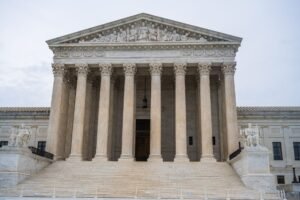
In a significant ruling on Friday, the Supreme Court upheld the decision of the Chhattisgarh High Court to not dismiss an election petition filed against Bhupesh Baghel, the former Chief Minister of Chhattisgarh, at the preliminary stage. The case is titled Bhupesh Baghel v. Vijay Baghel.
Court Composition and Background
A bench composed of Chief Justice of India (CJI) Surya Kant, Justice Joymalya Bagchi, and Justice V Mohana heard the case. The petition in question arises from the 2023 Chhattisgarh Assembly elections, where Bhupesh Baghel was declared victorious in the Patan constituency, securing 95,438 votes to Vijay Baghel’s 75,715 votes.
Allegations and Legal Arguments
Vijay Baghel’s petition alleges that Bhupesh Baghel violated the Representation of the People Act, 1951, by organizing a rally during the 48-hour silence period preceding the election. According to Section 126 of the Act, such actions constitute an electoral offense. Senior Advocate Kapil Sibal, representing Bhupesh Baghel, contended that the alleged actions did not amount to corrupt practices under Section 123(7) of the Act.
Discussion in Court
During the proceedings, Justice Bagchi noted the need for Bhupesh Baghel to demonstrate that the election results were not materially affected by the alleged violation. Sibal argued that the gathering in question involved only about 200 people, which was unlikely to impact the election outcome, given Baghel’s winning margin of 20,000 votes.
Legal Journey and Current Status
Bhupesh Baghel’s legal challenge has navigated a complex path. Initially, he contested a May 8, 2025, High Court order that denied his application under Order VII Rule 11 of the CPC to dismiss the election petition. This plea was withdrawn in July 2025, with permission to raise preliminary issues at the High Court. Despite raising these issues, the High Court ruled against Baghel again on June 15, 2026, leading to the current special leave petition.

The Supreme Court ultimately dismissed Baghel’s plea, advising him to present all his arguments before an election tribunal. This decision underscores the judiciary’s stance on the need for thorough examination of election-related allegations.