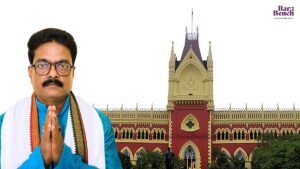
The Calcutta High Court recently dismissed a petition alleging that law enforcement authorities in West Bengal had forcibly removed loudspeakers from mosques. This case, titled Md. Danish Farooqui v State of West Bengal and Others, was heard by a Division Bench comprising Acting Chief Justice Tapabrata Chakraborty and Justice Atarup Banerjee.
Allegations and Lack of Evidence
The petitioner, lawyer Danish Farooqui, claimed that police in Hooghly and other districts had issued “blanket verbal directions” to mosques and other places of worship to dismantle their loudspeakers. These claims were allegedly based on information from various imams, secretaries, and presidents of worship managements. However, the court observed that no supporting documents were provided to substantiate these allegations.
The bench emphasized the absence of specific evidence, stating, “No particulars have been given as regards the 4000 mosques in West Bengal from which, under threat of coercive actions, loudspeakers have been removed. No specific overt act has been attributed to the police authorities and no contemporaneous documents have been produced in support of the averments made in the writ petition. Suspicion, howsoever high, cannot be a substitute of actual proof.”
Legal and Constitutional Arguments
Farooqui argued that the alleged actions constituted a violation of Article 25 of the Indian Constitution, which protects religious freedom, as the ‘azaan’ or call to prayer is a fundamental part of Islamic practice. Senior Advocate Kalyan Bandyopadhyay, representing Farooqui, maintained that loudspeakers were removed without any formal legal order or any measurement of noise levels to verify compliance with the Noise Pollution (Regulation and Control) Rules, 2000.
Response from State Counsel
Opposing the petition, Advocate General Surajit Nath Mitra contended that the plea lacked specifics and that no imam had personally come forward with allegations. “Not a single imam has come forward. Who is saying? The petitioner is saying ‘I have come to know’. Some responsibility has to be taken,” Mitra argued. Additional Advocate General Billwadal Bhattacharyya supported this stance.

The court highlighted that the petitioner failed to demonstrate any arbitrary or whimsical actions by the police as reported in the petitioner’s referenced newspaper article. Concluding that the plea lacked sufficient evidence, the bench dismissed the petition, declining any relief.
Conclusion
The court ruling underscores the need for concrete evidence when bringing forth allegations of constitutional violations and emphasizes the importance of adhering to legal processes in addressing grievances related to religious practices and noise regulations.