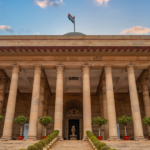
The Supreme Court of India has voiced significant concerns over the inefficiencies and high costs associated with arbitration proceedings, emphasizing that extended hearings undermine the core benefits of opting for arbitration over traditional litigation. A bench comprising Chief Justice of India Surya Kant and Justices Joymalya Bagchi and V Mohana deliberated on appeals filed by members of an arbitral tribunal involved in a dispute between HCL Infosystems Limited and Rajasthan power distribution companies, including Jaipur Vidyut Vitran Nigam Limited.
The proceedings, which commenced in 2020, had accumulated 198 sessions without reaching a conclusion, despite substantial fees being disbursed. Observing this, the Rajasthan High Court had previously ordered a 5% reduction in arbitrators’ fees effective from April 2025, citing the unwarranted delay. The decision led the arbitrators to seek recourse from the Supreme Court. However, the apex court echoed similar sentiments, criticizing the protracted timeline.
Justice Bagchi questioned the efficacy of arbitration that spans several years, pointing out that the process is intended to be a swift and economical alternative to court litigation. He remarked, “We advocate for an arbitration-friendly environment, yet this scenario is clearly excessive. Our observations are not against individual arbitrators but rather the procedural framework. Arbitration should be a cost-effective and convenient alternative. If hearings extend from 2024 to 2026, the very essence of arbitration is lost.”
Origin of the Dispute
The contention originated from contracts awarded to HCL in 2009 under the Restructured Accelerated Power Development and Reforms Programme for IT and power infrastructure across Rajasthan, valued at approximately ₹528.20 crore. Arbitration was initiated in September 2019, with the initial tribunal session occurring in July 2020. The tribunal, comprising former Supreme Court Justice Deepak Verma and former High Court Justices Dinesh Chandra Somani and N Kumar, challenged parts of the High Court’s judgment.
The Rajasthan High Court, led by Justice Sameer Jain, took issue with the multiple extensions granted to the arbitration process, noting the lack of resolution since 2009. It criticized the inefficiencies and increasing costs which, by then, had amounted to approximately ₹13 crore. The High Court ordered a monthly fee reduction of 5% for delays after April 30, 2025, mandating that the fees already paid be proportionately returned to the parties. Furthermore, it instructed the tribunal to conduct daily hearings at the Jaipur Arbitration and Mediation Centre, concluding the proceedings and delivering an award within 45 days from its May 27 judgment.

Supreme Court’s Interim Order
Following the High Court’s decision, the tribunal approached the Supreme Court. On June 30, the apex court issued a notice concerning HCL Infosystems’ challenge to the High Court’s ruling, permitting the continuation of arbitral proceedings but restraining the tribunal from issuing its final award. The Court also stayed the High Court’s directive to refund part of the tribunal’s fees. Subsequently, Justices KV Viswanathan and Alok Aradhe issued notices on the power distribution companies’ cross-petition, consolidating it with HCL’s appeal.
During a hearing on August 17, the Supreme Court reiterated the need to scrutinize the overall delay, acknowledging the passing of one arbitrator and the subsequent appointment of a substitute. The Court remarked that had conventional litigation been pursued, a verdict might have been reached by now. It suggested that the case could serve as a basis to evaluate broader arbitration norms. The bench instructed the parties to file and exchange their written submissions within a ten-day period. In the meantime, the interim arrangement remains, allowing proceedings to continue without the tribunal issuing its final award until further orders are given.