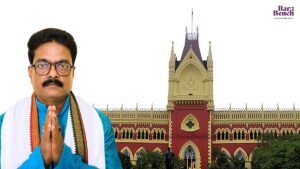
The Karnataka High Court has sharply criticized the Whitefield police station for repeatedly failing to adhere to established arrest guidelines. Justice M. Nagaprasanna, presiding over the case, directed the State Director General of Police (DGP) and Inspector General of Police (IGP) to implement comprehensive guidelines for handling cases related to social media posts, as emphasized in the case Mohan Gowda v. State of Karnataka.
Mandating Guidelines for Social Media Cases
Justice Nagaprasanna referred to the precedent set in Nalla Balu v. State of Telangana, where the Supreme Court endorsed the Telangana High Court’s guidelines on addressing complaints concerning social media. These guidelines include verifying the complainant’s standing, conducting preliminary inquiries, and ensuring a higher threshold for offenses related to media posts or speeches. The court emphasized the importance of protecting political speech and acknowledged defamation as a non-cognizable offense, also cautioning against frivolous complaints.
The judge instructed the DGP and IGP to issue a circular to all Karnataka police stations, echoing the directives from the Nalla Balu case. The circular should highlight that any breach of these guidelines could prompt departmental inquiries and the imposition of costs by constitutional courts.
Whitefield Police Station Under Scrutiny
The court took particular exception to the Whitefield police station’s conduct, suggesting it be renamed “darkfield” due to its repeated procedural violations. These remarks came during a hearing involving petitioner Mohan Gowda, a leader of the Hindu Rashtra Samanvaya Samithi. Gowda had been charged by the police following a Facebook post about the cancellation of comedian Kunal Kamra’s show, which he claimed was a victory for Hindu unity. The show, initially scheduled at Uru within Whitefield limits, was called off after Gowda’s representation, prompting the police to file a suo motu case against him.
Gowda petitioned the court to dismiss the criminal proceedings against him. During the proceedings, Justice Nagaprasanna ordered the Deputy Commissioner of Police (DCP), the Assistant Commissioner of Police (ACP), and the investigating officer to appear before the bench. The court questioned the frequent appearance of Whitefield police in legal proceedings and cited a previous instance where the station failed to produce CCTV footage, offering the excuse of a power outage.

Emphasizing Rule of Law
The High Court reiterated the need for police to operate within the rule of law, cautioning against the misuse of arrest power as a tool of oppression. The bench reminded that police officers, despite their uniforms, are not above the law and should not act as if they are immune from constitutional scrutiny.
The court issued a stern warning to the DCP regarding potential departmental inquiries and adverse entries in his service record if such violations continued. The court’s ruling is a clear message against any form of “police raj,” imposing a penalty of ₹3 lakh on the Whitefield police for the illegal arrest in this case.
Advocate Girish Bharadwaj represented the petitioner, while State Public Prosecutor BN Jagadeesha appeared on behalf of the state and police personnel.