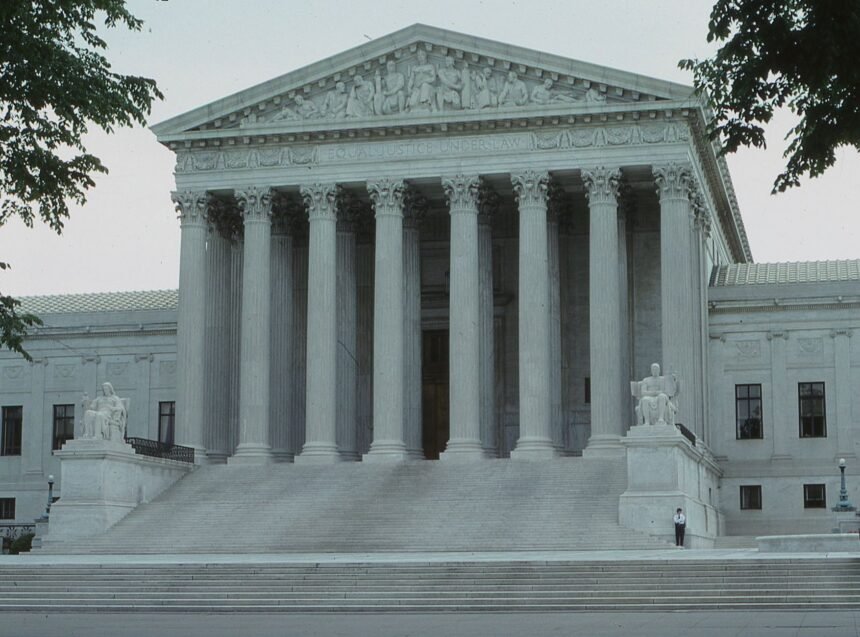
The Supreme Court of India has urged the Central government to deliberate on whether the retail sale of acid should be entirely prohibited or only allowed under strict regulatory measures. This directive was issued during the hearing of Shaheen Malik v Union of India, as the Court was informed about the continued easy access to acid despite the 2013 guidelines aimed at regulating its sale.
A Bench led by Chief Justice of India (CJI) Surya Kant, alongside Justices Joymalya Bagchi and V Mohana, emphasized the necessity for states and union territories to develop and present rehabilitation schemes for acid attack survivors within six weeks. The Court noted, “It has been brought to our attention that certain guidelines established in 2013 have largely become ineffective and are not being adhered to. Hence, the Union should consider devising a scheme to ensure the rigorous regulation of acid’s retail sale in the marketplace.”
Senior Advocate Saurabh Kirpal highlighted to the Court that a volunteer survey revealed the persistent easy availability of acid, contrary to the safeguards previously established. He advocated for a ban on retail sales, suggesting that industrial sales could proceed and household cleaning acids be replaced with alternatives.
CJI Kant instructed parties to provide a tabulated summary of the issues, previous court orders, and pending actions. He stressed the government’s responsibility, saying, “We can’t impose the burden on the victims to dictate regulatory measures.”
Additional Solicitor General (ASG) Aishwarya Bhati, representing the Union, informed the Court that post the Laxmi v Union of India case, the Centre had issued advisories and formulated Model Rules, which were disseminated to state governments. However, states had not established the necessary committees nor enforced the rules.

CJI Kant suggested potential safeguards, such as age restrictions on sales, requiring buyers to document their purchase reasons, and maintaining these records. He also pointed out the critical need for awareness on immediate treatments for acid attack victims, proposing that NGOs aid in creating educational programs, particularly for schools and colleges, making it a mandatory curriculum component.
During the proceedings, an acid attack survivor advocated for a ban, highlighting the frequency of attacks and sharing her enduring psychological trauma from an incident 17 years prior. CJI Kant reassured, “हम लगे हुए हैं। कुछ ना कुछ करेंगे। इसको ऐसे नहीं छोड़ेंगे। कहीं न कहीं logical conclusion तक लेकर जाएंगे। (We are engaged in it. We will do something. We will not leave it like this. Somewhere or the other, we will take it to a logical conclusion).”
Kirpal also addressed the issue of acid ingestion, noting that although the government recognized it as a disability, victims struggled to obtain disability certificates due to criteria focused on physical disfigurement. ASG Bhati stated that the 2024 disability assessment guidelines were being revised to include acid ingestion, with the final draft under review.