Introduction to the New Judicial Clerkship Model
The journey to becoming a civil judge in India involves far more than passing an examination. It marks the beginning of a professional life that significantly impacts people’s liberty, dignity, property, and rights. Given the weight of this responsibility, principles of equality and fairness must accompany a candidate beyond the examination hall, permeating every stage of their career progression.
Supreme Court’s Landmark Decision
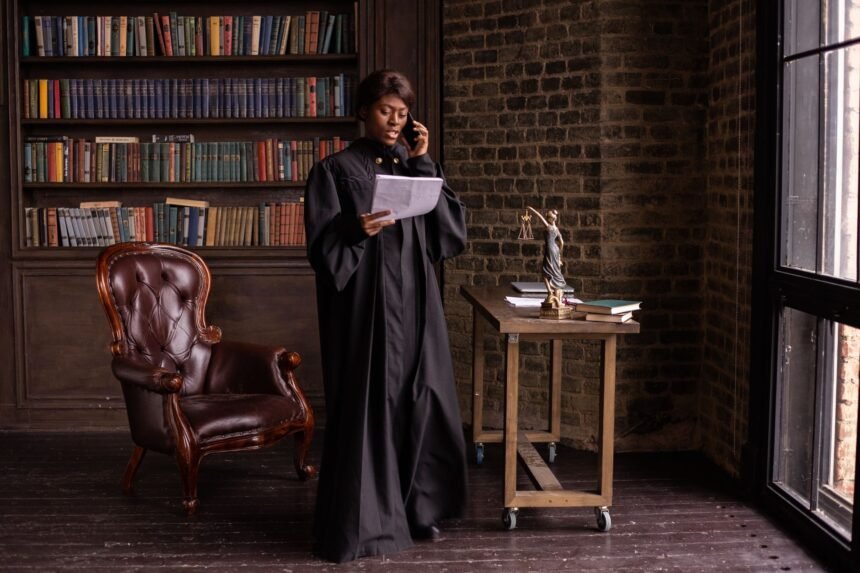
In the landmark case of Bhumika Trust v. Union of India, the Supreme Court of India, through a 2:1 majority ruling, has introduced a transformative approach to the recruitment and training of Civil Judges (Junior Division). Acknowledging the time elapsed since the 2025 judgment, the Court established a transitional arrangement valid until March 31, 2027. Under this scheme, selected candidates are recognized as having completed one year of Bar practice. They will then embark on a structured traineeship: one year of training at the State Judicial Academy followed by a year-long clerkship split between a district judge or higher judicial services member and a sitting High Court judge, thus satisfying the three-year practice rule.
Evaluation Concerns and Standards
The culmination of this clerkship requires a comprehensive evaluation by the supervising High Court judge. The trainee’s progression to a regular judicial position depends on a “satisfactory” assessment, a term that raises questions regarding its interpretation. Does it encompass concrete metrics such as legal reasoning, procedural knowledge, and professional conduct, or could it extend into subjective notions of “suitability”? Without clear definitions, the risk of subjective interpretation by evaluators looms large.
Addressing Inequality in Judicial Training
Concerns about potential inequality in this evaluation process are not unfounded. The Supreme Court, in its judgment, acknowledged disparities in Bar experience quality, influenced by candidates’ personal circumstances. Particularly, women and candidates from marginalized or economically weaker backgrounds face significant barriers. The legal profession’s playing field is uneven, and the system must ensure these inequalities do not re-emerge during clerkship.
Constitutional Safeguards and Practical Implementation
Articles 14 and 16 of the Indian Constitution, guaranteeing equality before the law and equal opportunity in public employment, are pivotal here. These principles, as outlined in EP Royappa v. State of Tamil Nadu, require public power to be exercised fairly and without arbitrariness. The Supreme Court has directed that evaluations be objective, considering conduct, diligence, analytical ability, and understanding of legal procedure, ensuring they don’t become an undefined barrier to appointment.
More Read

Ensuring Transparency and Fairness
For transparency in clerkship allocations, candidates could choose from a list of eligible judges, ensuring a fair distribution system. If multiple candidates prefer the same judge, conflicts could be resolved through rotation or random draws. Evaluation criteria should be clear, focusing on job-related skills rather than subjective opinions, with a mechanism for trainees to report unfair treatment without fear of repercussions.
Future Directions and Challenges
Post-April 1, 2027, candidates must have at least one year of genuine Bar practice before entering the training and clerkship framework. The Supreme Court has mandated periodic reviews of the scheme to assess recruitment quality and trainee performance, ensuring constitutional safeguards accompany the benefits of structured clerkship training.
Dissenting Opinion and Conclusion
In a dissenting opinion, Justice Vinod Chandran argued against the review, stating that a two-year regime with half pay and no service credit couldn’t replace Bar practice. This underscores the importance of a robust evaluation and allocation mechanism. As the majority’s framework was narrowly decided, its true efficacy will depend on fair implementation.
More Read

Ultimately, candidates who have already proven themselves through competitive exams deserve an assurance of fair and consistent standards during their clerkship, promoting equality from selection through to their judicial careers.
Saniya Siddiqui is an LL.B student at the University of Lucknow.