Delhi High Court’s Decision on Raghav Chadha’s Personality Rights Case
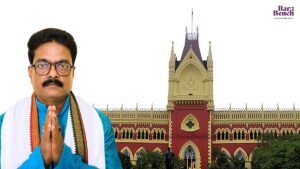
In a recent ruling, the Delhi High Court opted not to issue a comprehensive interim order that would mandate the removal of potentially defamatory content concerning Bharatiya Janata Party (BJP) Member of Parliament Raghav Chadha. However, Justice Subramonium Prasad did instruct the removal of content highlighted in six specific documents to which Chadha had raised objections.
Justice Prasad stated, “I have ordered the removal of five (sic) documents. Rest of the content is not defamatory.” This statement was later clarified in the official judgment, confirming the removal of content from six documents. Furthermore, the defendants, identified as Defendants No. 2 and 4, are required to furnish the plaintiff with Basic Subscriber Information (BSI) and IP logs associated with the content in question, within two weeks from the order’s issuance.
Arguments and Court Observations
During a prior hearing on May 21, the court had preliminarily observed that the flagged content did not appear to infringe Chadha’s personality rights but rather constituted political criticism. Justice Prasad remarked, “The first impression in my mind. Prima facie, there is no personality right involved in this case. A decision taken by you in a political arena is being criticised…” He further reflected on how political criticism has been a longstanding tradition in India, drawing a parallel to historical examples, such as R.K. Laxman’s cartoons, which critiqued political decisions.
Raghav Chadha approached the court seeking an injunction against AI-generated deepfakes, manipulated videos, synthetic voice cloning, morphed visuals, fabricated speeches, and other deceptive digital content circulating on social media. The court was informed of imagery depicting Chadha in a saree and Prime Minister Narendra Modi showering money on him, following Chadha’s shift from the Aam Aadmi Party to the BJP in April.
Chadha’s legal team contended that the content was defamatory, suggesting that Chadha had sold himself for financial gain. Justice Prasad, however, indicated that the issue was more about defamation than about the protection of personality rights, emphasizing the distinction between the two types of legal actions. He also questioned the sensitivity of political leaders to such criticism, stating, “As a political leader, can you be so sensitive?”

Next Steps
In light of the defendants’ anonymity, Justice Prasad considered appointing an amicus curiae to assist the court. Despite this, Chadha’s counsel pressed for interim relief, prompting the court to proceed with issuing an interim order. Senior Advocate Rajiv Nayar represented Chadha, with the suit being filed by advocates Satatya Anand and Nikhil Aradhe.
The case highlights the ongoing challenge of balancing free speech and protection against defamation in the digital age, especially within the political arena.