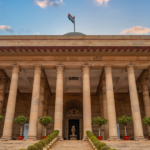
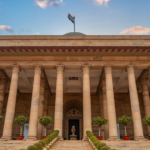
In an effort to bolster academic and diplomatic ties between India and Japan, Professor C Raj Kumar, the founding Vice Chancellor of OP Jindal Global University (JGU), and Dr Shashi Tharoor, an Indian Member of Parliament, delivered addresses at the National Diet Building in Tokyo. Their discussion underscored the pivotal roles that higher education and parliamentary diplomacy play in reinforcing democratic partnerships within Asia, emphasizing collaboration, research, and innovation.
This significant interaction coincided with the official visit of Japan’s Prime Minister to India and the India-Japan Annual Summit with Indian Prime Minister Narendra Modi. According to a press release, the Tokyo meeting highlighted that enduring bilateral relations are not solely the domain of governments but are also enriched by the contributions of parliaments, universities, scholars, students, industry, and civil society.
The event underscored JGU’s commitment to fostering India-Japan relations through higher education. JGU has established partnerships with 27 Japanese universities, and approximately 200 JGU students are currently engaged in short-term study programs throughout Japan. The session, chaired by Fukushiro Nukaga, the 80th Speaker of Japan’s House of Representatives, convened a bipartisan assembly of National Diet members, including representatives from both the House of Representatives and the House of Councillors. The diverse participation from senior parliamentary leaders, former ministers, diplomats, academics, policy experts, and industry leaders reflected Japan’s strong commitment to enhancing dialogue and cooperation with India.
Professor C Raj Kumar’s Address
Professor C Raj Kumar highlighted the critical role of universities in shaping international relations, noting that higher education institutions serve as global platforms for cross-border idea exchange, innovation, and research. He emphasized that the evolving geopolitical landscape in Asia offers India and Japan a unique opportunity to strengthen their partnership through investments in education, research, technology, and human capital.
Professor Kumar called for deeper collaborations between Indian and Japanese universities, encouraging joint research initiatives, student mobility, and collective efforts by governments, industries, and academia to develop solutions for the Indo-Pacific region and beyond. He noted that JGU’s partnerships with 27 Japanese institutions and the participation of nearly 200 students in Japanese study programs demonstrate a long-term commitment to academic cooperation that fosters student mobility, faculty collaboration, and intercultural understanding.

Concluding his address, Professor Kumar stressed that the 21st century should see the trust between India and Japan evolve into a comprehensive partnership driven by knowledge, technology, sustainability, and shared democratic values.
Dr Shashi Tharoor’s Insights
Sharing the platform with Professor Kumar, Dr Shashi Tharoor reflected on the importance of parliamentary diplomacy, emphasizing that diplomacy extends beyond negotiating interests and involves preserving historical ties and fostering mutual respect. He highlighted the centuries-old relationship between India and Japan, rooted in Buddhism, cultural exchange, and democratic values, as both a source of pride and a responsibility.
Dr Tharoor stressed that while governments establish strategic partnerships, it is ultimately the people who sustain them. The future of India-Japan relations, he suggested, will hinge on relationships built among students, scholars, parliamentarians, and citizens, turning strategic cooperation into a lasting partnership.
More Read
Members of the National Diet expressed their admiration for India’s heritage, democratic traditions, and economic transformation, reaffirming their commitment to strengthening parliamentary exchanges and educational and scientific collaborations. The discussions reflected a shared belief that the future of India-Japan relations will be shaped not only by diplomacy but by the strength of democratic institutions, research collaborations, and the opportunities for cultural understanding and youth engagement.
The addresses by Professor C Raj Kumar and Dr Shashi Tharoor affirmed the central role of democratic institutions, higher education, research, and people-to-people engagement in promoting peace and prosperity across the Indo-Pacific and beyond.