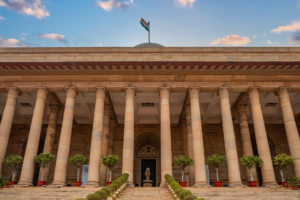
The Karnataka High Court has expressed deep concern over the prolonged delay in concluding a child rape case that has been pending since 2014. Justice M. Nagaprasanna, presiding over the matter, described the situation as a tragedy, emphasizing that the protracted delay not only fails judicial procedure but also perpetuates the trauma endured by the victim, who was merely six years old at the time of the crime.
Justice Delayed Equals Injustice
Justice M. Nagaprasanna highlighted that in cases involving such grave offenses, justice delayed is equivalent to a continued miscarriage of justice. He noted that every unnecessary postponement compounds the victim’s suffering, forcing the child to remain entrenched in her trauma for over a decade. “It shocks the conscience of the Court that it is pending for the last 12 years. Nothing can be more appalling than a case concerning the rape of a minor child pending for 12 long years,” remarked Justice Nagaprasanna in his order dated July 3.
Mandate for Prompt Trial Conclusion
The High Court has directed the trial court to conclude the proceedings within eight weeks from the receipt of its order, stressing that the victim should not be subjected to continuously reliving her traumatic experiences. “A child who has suffered the indignity of sexual abuse cannot be compelled to relive the trauma endlessly because the criminal justice system has surrendered to the culture of adjournments,” the Court stated. It criticized the routine granting of adjournments, especially in sensitive cases like this, pointing out that such practices have been repeatedly censured by the Apex Court.
Issue of Unverified Statements
The case, registered under the Protection of Children from Sexual Offences Act, 2012 (POCSO Act), involves the rape of a girl child at a school. During the trial, concerns were raised about a statement given by the child to a magistrate, which lacked the requisite signatures. The child’s father sought to have the magistrate summoned to validate the statement’s credibility. However, the High Court refused, clarifying that the POCSO Act does not mandate such statements to be signed by either the child or the magistrate.
Presumption of Regularity
The Court emphasized that the process of recording statements under Section 164 of the Code is presumed regular and should not be lightly challenged by summoning magistrates. “The statutory scheme of the POCSO Act and Section 164 of the Code does not oblige a child victim to subscribe his or her signature to a statement recorded under Section 164 of the Code,” the Court noted. It further added that any concerns regarding the statement’s credibility are speculative and can only be addressed if they arise during the trial.
More Read

Final Rulings and Directions
In conclusion, the High Court dismissed the father’s plea but underlined the necessity for a swift and definitive trial conclusion, issuing strict instructions to ensure adherence to the set timeline. The Court’s decision was represented by Advocates Spoorthi Cotha and Hari Om Tiwari for the petitioner, while High Court Government Pleader Rashmi Patel appeared for the State.