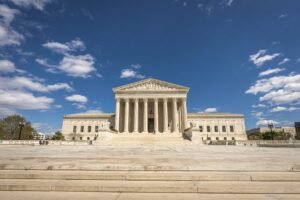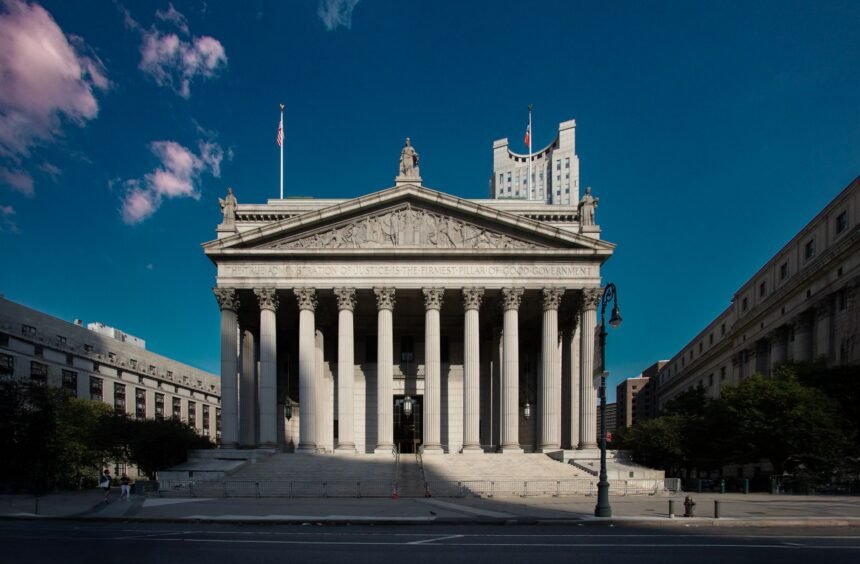
The Kerala Waqf Board has petitioned the Supreme Court to challenge a recent Kerala High Court ruling that restricts the board from making substantial decisions, engaging in capital expenditures, or implementing policy changes. This appeal was brought before Chief Justice of India (CJI) Surya Kant and Justices Joymalya Bagchi and V Mohana, who have agreed to schedule an urgent hearing for Monday, July 20.
High Court’s Interim Order
On July 15, a Division Bench comprising Chief Justice Soumen Sen and Justice Syam Kumar VM of the Kerala High Court issued an interim order. The order prohibits the Kerala Waqf Board from undertaking significant decisions until the court resolves several petitions challenging the board’s current composition. These Public Interest Litigation (PIL) petitions argue that the board’s makeup appears to violate Section 14 of the 2025 Waqf Amendment Act, which requires the inclusion of at least two non-Muslim members in the board.
Interim Administration
The High Court also decreed that, temporarily, the board’s activities should be managed and supervised by the Joint Secretary of the State Government responsible for Waqf affairs. This directive follows concerns raised in the petitions regarding the board’s current structure and operations.
Petitioners’ Concerns
The High Court’s decision was prompted by PILs filed by several parties, including Shone George, the State Vice President of the Bharatiya Janata Party (BJP); the Assembly of Christian Trust Services (ACTS), a Christian trust; and Stalin VM, a retired Indian Army Force Junior Warrant Officer and former undersecretary to the Kerala government.
The petitioners argue that the board’s current composition, lacking the mandated non-Muslim members as per the 2025 Waqf Amendment Act, is unconstitutional. This amendment, effective since April 8 last year, mandates the inclusion of at least two non-Muslim members, excluding ex officio members. While the Supreme Court has reviewed challenges to this amendment, it has not suspended this requirement but has capped the maximum at three non-Muslim members per board.
More Read
Specific Allegations
Shone George’s petition claims that the Kerala government intentionally disregarded this statutory requirement by forming a board composed solely of Muslim members. Meanwhile, ACTS’s petition challenges the board’s decision to upload information about a contentious land area in Munambam to the UMEED Portal, a centralized database of waqf properties.
Additionally, Stalin’s petition questions the legitimacy of former CPI(M) MLA Kunhammed Kutty Master’s continued membership in a waqf board seat designated for an MLA, despite his departure from the legislature following the 2026 Assembly elections.
Note: An earlier version of this article incorrectly stated that the petition was filed by the State of Kerala. It has been clarified that the petition was filed by the Kerala Waqf Board. This error has been corrected.