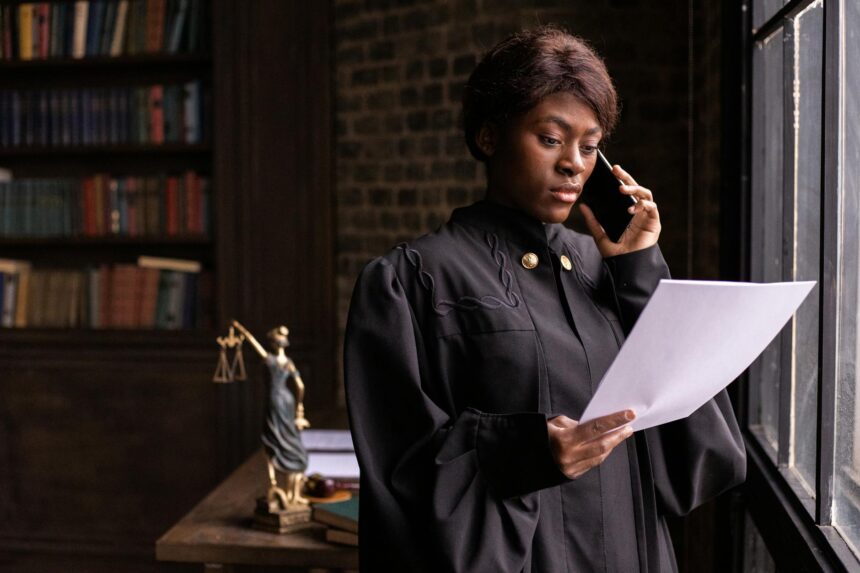
Kerala, often lauded for its achievements in gender parity, presents a paradoxical scenario when it comes to the designation of women as Senior Advocates in its legal community. Despite the state’s impressive sex ratio, substantial investment in women’s health, and significant female presence in education and politics, the legal profession tells a different story.
Kerala’s legal history boasts pioneering figures like Justice Anna Chandy, India’s first woman judge in 1937, and Justice Fathima Beevi, the first woman to ascend to the Supreme Court in 1989. However, these milestones mask a persistent gender imbalance in the professional realm. While more women than men have entered the legal sector in recent years, their representation among Senior Advocates remains disproportionately low.
Among the ranks of Senior Advocates designated by the Kerala High Court, only three women have been honored: Seemandini VP, Sumathi Dandapani, and Dhanya P Ashokan. This is particularly glaring for a state that prides itself on its progressive stance on women’s issues.
The Struggle for Recognition
Seemandini VP and Sumathi Dandapani were the first women to receive the Senior Advocate designation in Kerala in 2007. For 17 years, they stood alone in a predominantly male domain until Dhanya P Ashokan joined them in 2024, alongside 19 male counterparts.
Ashokan highlights the dual burden faced by women lawyers, who juggle professional responsibilities with traditional domestic roles. “A woman comes to court after managing her household duties. Post-court, these responsibilities often continue, unlike for men, whose primary obligation is typically financial,” she noted.
More Read

Sumathi Dandapani sheds light on the complex dynamics that discourage women from applying for senior designation. “Many qualified women refrain from applying if their lawyer husbands have not been designated as Senior Advocates,” she explained, pointing to a systemic issue.
Societal and Institutional Barriers
According to Seemandini, societal perceptions that domestic responsibilities impair professional capabilities are unfounded and perpetuate gender disparity in the legal field. “The assumption that women cannot handle professional duties as well as men is baseless,” she asserted.
Ashokan attributes part of the problem to the male-dominated history of the legal profession, where women often face discouragement and bias. “Courtrooms predominantly occupied by men can intimidate women, leading to self-doubt,” she said.
More Read

The language used in the professional sphere also plays a role. Ashokan emphasized the importance of recognizing women as equals in the legal field without gendered qualifiers. “A woman’s professional growth begins when society acknowledges her talent without emphasizing her gender,” she stated.
Calls for Change
Seemandini criticizes the judiciary’s entrenched bias, noting a common belief that only male lawyers can tackle complex legal issues. “This mindset among judges needs to change,” she insisted.
Dandapani explained that the path to becoming a Senior Advocate is more arduous than that to the Bench, as it requires consensus among the entire court. However, she maintains hope for the future, encouraging young women lawyers to apply for senior designation and to trust in their capabilities.
Ultimately, mentoring, support, and recognition of women’s achievements in law are vital. As Ashokan advises, “Young women lawyers should not hesitate to seize opportunities, seek guidance, and remain confident in their abilities. Success will follow.”
The legal community in Kerala is called upon to foster a more inclusive environment, ensuring that the next generation of women lawyers can break through traditional barriers and achieve the recognition they deserve.