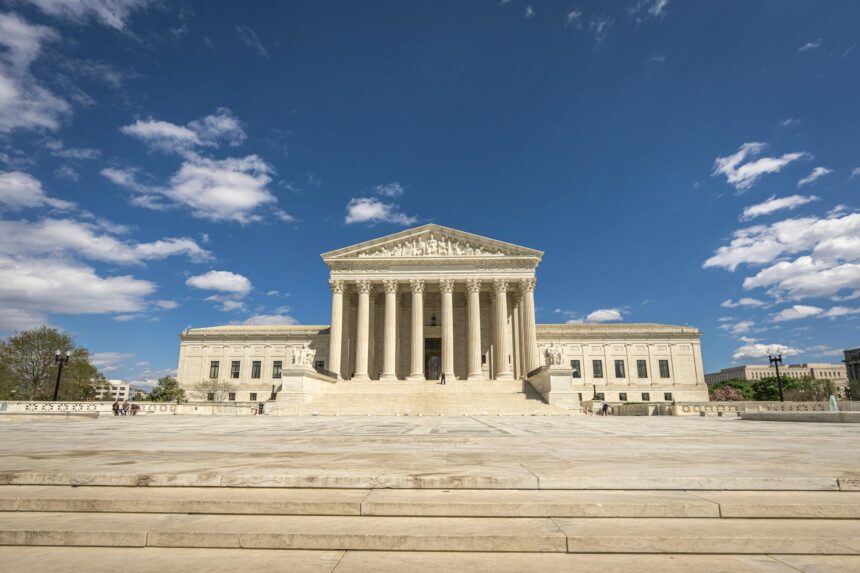
The Supreme Court of India has affirmed the anticipatory bail granted by the Allahabad High Court to Swami Avimukteshwaranand Saraswati in a case under the Protection of Children from Sexual Offences (POCSO) Act. The Bench, comprising Justices MM Sundresh and N Kotiswar Singh, dismissed an appeal by complainant Ashutosh Brahmachari, questioning his initial inaction in the matter.
During the proceedings, the Bench queried Brahmachari on his delayed response, asking, “You were there earlier. You knew about it. What did you do? You knew about the offence? After the offence is committed. You went to police for some other purpose. Why did you not inform police about this?” The complainant’s counsel replied, “I was severely hurt,” but this argument did not sway the Court.
The appeal highlighted the severe nature of the allegations, suggesting that anticipatory bail should only be granted in exceptional cases. Additionally, it was noted that there was non-compliance with court-imposed restrictions on media engagement, as the accused participated in media interactions despite being directed otherwise by the High Court.
The origins of this case trace back to a special POCSO court’s directive to register an FIR against Swami Avimukteshwaranand over allegations of sexual abuse involving two minor boys at a camp in Prayagraj. The FIR was filed by Shankuri Peethadheshwar Ashutosh Maharaj. Seeking relief, Saraswati approached the High Court for anticipatory bail, which was granted amidst doubts regarding the prosecution’s case.
The High Court’s decision was influenced by several factors. It observed inconsistencies in the behavior of the victims, who reportedly disclosed the incident to a stranger rather than their guardians. There was also a six-day delay in filing the FIR, attributed to the informant’s engagement in religious rituals. Furthermore, the court noted that the victims were not promptly returned to their parents or authorities and had participated in media interviews, contrary to POCSO and Juvenile Justice procedural norms.
More Read

Concerns were also raised about the medical evidence and the case’s backdrop, involving a prior dispute between the accused and local authorities concerning arrangements at the Sangam during Mauni Amavasya.
In response to the High Court’s ruling, the complainant approached the Supreme Court, arguing that the High Court overstepped its bounds by delving into evidentiary matters more suited for trial. The plea emphasized the accused’s influence, suggesting a risk of interference with the investigation and possible witness tampering. It argued that once an FIR is registered as per judicial directions and statutory presumption under Section 29 of the POCSO Act is in place, the court should focus on standard bail parameters rather than a detailed case assessment.
Addressing the High Court’s concern over the victims’ disclosure to the complainant rather than their guardians, the plea referenced the chaotic conditions during the Magh Mela, which allegedly prevented the minors from reaching their families. It was argued that the complainant, being familiar to the victims and present at the site, naturally received their disclosure.
More Read
The appeal was filed by advocate Saurabh Ajay Gupta, seeking to overturn the High Court’s decision on anticipatory bail, but the Supreme Court ultimately denied the appeal, supporting the High Court’s decision.