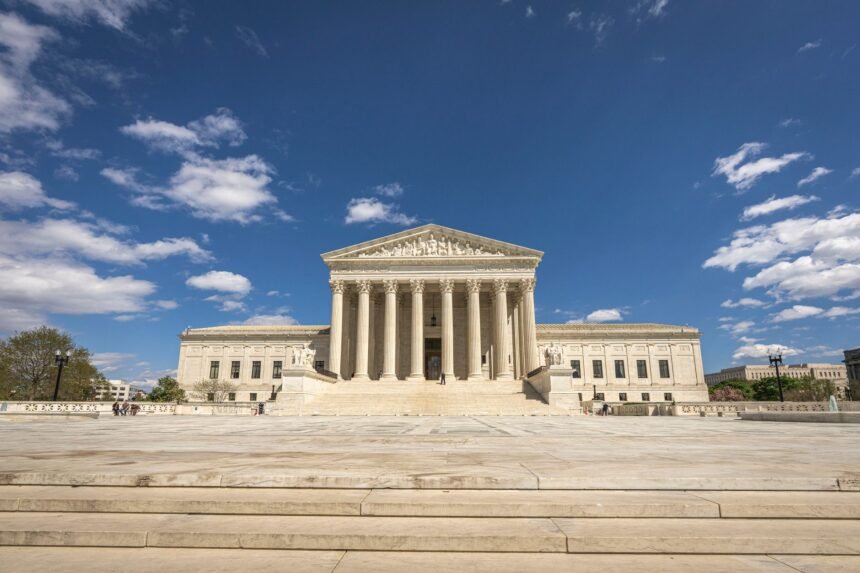
Supreme Court Engages with AAP’s Plea for Social Media Restoration
The Supreme Court of India has sought the Union government’s response regarding a plea submitted by the Aam Aadmi Party (AAP) to restore the Facebook and Instagram accounts of its Gujarat unit. These accounts were blocked just before the local body elections in the state, raising significant concerns about fair political discourse.
In a recent session, a bench composed of Justices PS Narasimha and Alok Aradhe issued a notice pertaining to the application. The Union government has been allotted a two-week period to present its response, as requested by Additional Solicitor General Archana Pathak Dave.
Senior Advocate Shadan Farasat Advocates for AAP
Representing AAP, Senior Advocate Shadan Farasat emphasized that the accounts were suspended on April 24, one day prior to Gujarat’s local body elections. Farasat clarified that while the main petition addresses broader issues with the blocking regime, the interim application focuses solely on the restoration of the party’s social media accounts during the ongoing adjudication.
Farasat argued for the restoration of the accounts, stating AAP’s willingness, without conceding any rights, to remove any specific offending content if identified. “My website is gone. It can’t be like that,” he urged the court, highlighting the urgency and the critical nature of the issue.
Legal Framework and Government’s Involvement
The petition disclosed that Meta, the parent company of Facebook and Instagram, had restricted access to these accounts in India following a request from a government or law enforcement agency. This action was taken under Section 79(3)(b) of the Information Technology Act, 2000.
More Read
AAP has challenged this decision, arguing that the blocking directive was not communicated to them. They contend that the accounts were suspended without prior notice, a hearing, or a reasoned order, which they claim contravenes the principles of natural justice and proportionality.
Disproportionate Restriction on Political Speech
According to the plea, blocking the entire Facebook page and Instagram handle of a recognized national political party constitutes a disproportionate restriction on political speech. Instead of targeting specific posts, the blanket suspension of the accounts is viewed as excessive and unjust.
The case, represented by Shadan Farasat along with advocates Siddhant Sharma and Talha Abdul Rahman, underscores the tension between regulatory actions and political freedoms in digital spaces.
More Read

Implications and Next Steps
The Supreme Court’s engagement with this issue highlights the ongoing debate over digital rights and government intervention in online platforms. As the Union government prepares its response, the outcome of this case could set a significant precedent for how political parties interact with social media in India.