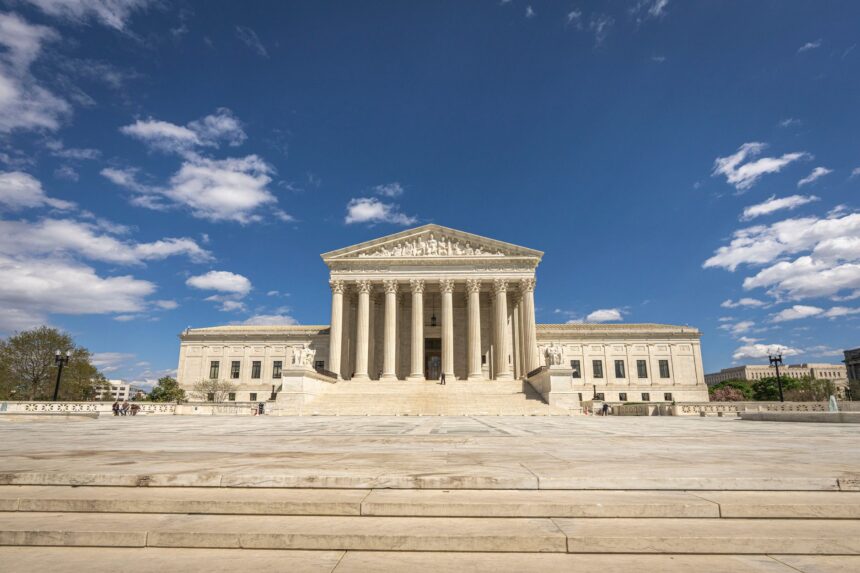
The Supreme Court of India has issued a series of directives aimed at safeguarding the dignity and social security of an elderly woman from Odisha and her visually impaired son, who are reportedly enduring severe poverty. The Court’s intervention comes as part of a suo motu case titled In Re: Ensuring Basic Human Dignity and Social Security for Differently Abled Citizens Living in Extreme Poverty and Other Ancillary Issues, initiated to address the welfare of persons with disabilities living in poor conditions.
The Bench, composed of Chief Justice of India (CJI) Surya Kant and Justice V Mohana, emphasized the importance of translating welfare schemes into tangible improvements in the lives of beneficiaries. The Court took cognizance of the challenging circumstances faced by Japa Bhue, who has been visually impaired since birth, and his mother, Radhika Bhue.
Addressing the immediate needs of the Bhue family, CJI Kant remarked, “We are concerned with whether a life with dignity can be granted to Smt. Bhue (mother of the visually impaired man).” The Bench has requested detailed information regarding the social security measures currently accessible to both Radhika Bhue and her son.
The Court has specifically asked to be informed about Radhika Bhue’s eligibility for old age pension and any social security benefits extended to her son. Further, it has mandated that the Member Secretary of the Odisha State Legal Services Authority personally engage with the family to assess their situation. The Secretary is also tasked with providing a comprehensive report on the family’s living conditions, welfare entitlements, and any additional support needed.
This report must include an evaluation of whether Radhika Bhue is eligible for a separate housing unit under any prevailing schemes. Moreover, the Court has taken a progressive step by directing that Japa Bhue be inducted as a paralegal volunteer. This role will enable him to assist other individuals with disabilities in understanding their legal rights while earning an honorarium equivalent to at least the legal minimum wage.
More Read

Highlighting the constitutional responsibilities of the state, the Court asserted, “The State shall ensure that all basic amenities and facilities necessary for a life of dignity are made available to the mother and her son.”
Radhika Bhue and her son currently reside in the Subarnapur district of Odisha. Following the death of the family patriarch, their financial struggles have intensified. Their home, a small asbestos-roofed structure, serves as kitchen, bedroom, and living area, with deteriorating conditions posing constant danger.
Despite multiple welfare programs targeting senior citizens and persons with disabilities, the Bhue family reportedly receives minimal support, such as a modest pension and limited food aid, insufficient for their needs. The Court is scrutinizing their exclusion from housing schemes during its ongoing suo motu proceedings.
More Read
The Court will revisit the case upon receipt of the report from the Legal Services Authority.