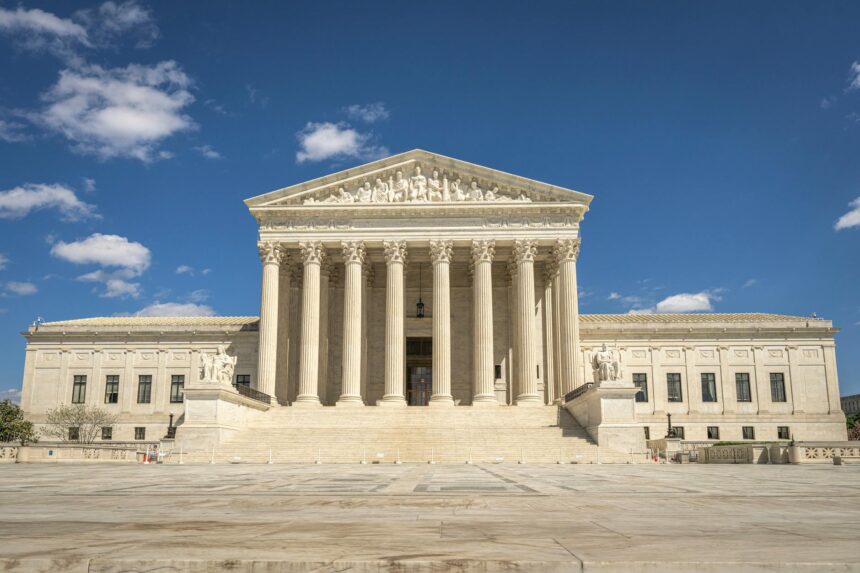
A recent petition has been filed in the Supreme Court of India, challenging the Central Board of Secondary Education’s (CBSE) revised policy mandating the study of three languages for Class 9 students. The case, titled Yashica Bhandari Jain & Ors. v Union of India & Ors., has been brought forward by parents and teachers from multiple cities including New Delhi, Gurgaon, Noida, and Chennai.
Legal Challenge to CBSE’s Language Policy
The petition was presented by Senior Advocate Mukul Rohatgi to a bench consisting of Chief Justice of India (CJI) Surya Kant, Justice Joymalya Bagchi, and Justice Vipul M Pancholi. Rohatgi argued that the abrupt requirement for Class 9 students to learn two additional languages would interfere significantly with their preparation for Class 10 board exams, placing an unreasonable burden on them. “How can students suddenly learn additional languages and then sit for the Class 10 exams? This will create chaos,” he contended.
Taking cognizance of the arguments, CJI Surya Kant assured that the court would schedule the hearing for the following week.
Background of the Policy
The contested policy is rooted in a CBSE circular issued on May 15, aligning with the National Education Policy 2020 (NEP 2020) and the National Curriculum Framework for School Education (NCF-SE) 2023. Under this revised framework, students entering Class 9 from July 1, 2026, are required to study three languages, of which at least two must be Indian languages. A foreign language can only be chosen if the other two languages are Indian, or it can be taken as a fourth optional subject.
The petition notes a significant deviation from a prior CBSE notification from April 9, 2026, which had deferred the third language requirement until the 2029–30 academic year. Historically, CBSE students have been required to study only two languages up to Class 10, typically English and another language, such as Hindi or a regional dialect.
More Read

Petitioners’ Concerns
The petition challenges several aspects of the new policy, citing its timing, implementation, and practical implications. It argues that the policy imposes an unexpected academic load, lacks necessary infrastructural support, and results in discriminatory impacts. The petition states, “The Impugned Circular imposed an acute additional burden upon Class IX students already engaged in demanding academic preparation for the Class X Board Examinations.”
Criticism is also directed at the policy’s implementation, which allegedly undermines the educational objectives claimed by CBSE. The plea highlights the disruption caused by the sudden policy change, which the CBSE itself acknowledged was creating “a sense of restlessness” among stakeholders.
Additionally, the plea points to the absence of sufficient educational materials and teaching resources as a barrier to achieving language proficiency. “By directing Class IX students to use Class VI textbooks as the primary pedagogical resource, the Circular does not advance language proficiency but institutionalises pedagogic inadequacy,” it argues.
More Read

The petition also raises concerns about regional disparities, especially affecting students in non-Hindi-speaking states, and notes a lack of clarity around the Class 10 Board examination system. Although the CBSE has stated that no student will be prevented from taking Board exams due to the additional language requirement, the petition argues that this creates a contradictory situation by making the subject compulsory without formal accountability at the Board level.
The petition was filed through advocate Shraddha Deshmukh, with the assistance of advocates Charanya Lakshmikumaran, Sarthak Gupta, and Kaustubh Khanna. The matter has attracted significant attention, with live coverage provided by various legal news platforms.