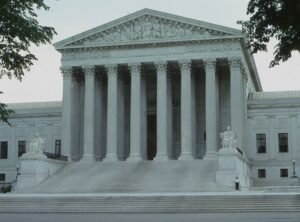
Supreme Court Rejects Review Plea on Hate Speech Case
In a significant legal development, the Supreme Court of India has dismissed a review petition filed by CPI(M) leader Brinda Karat. The petition sought to challenge the court’s earlier decision from April 29, which cleared BJP leaders Anurag Thakur and Parvesh Verma of any cognisable offences related to their speeches during the 2020 Delhi Assembly election campaigns.
The Supreme Court, in its chamber session, found no merit in revisiting the case, adhering to its initial judgment. The Bench, comprising Justice Vikram Nath and Justice Sandeep Mehta, had previously denied Karat’s request for an open court hearing on the matter. On July 29, the review petition was formally dismissed.
No Error Found in Previous Judgment
“We have examined the review petition and the supporting grounds. We do not find any error, much less apparent, in the order impugned, warranting its reconsideration,” stated the Bench.
The controversy revolves around speeches made during the Delhi Assembly elections in January 2020, a time marked by intense protests against the Citizenship Amendment Act (CAA), including large-scale demonstrations at Shaheen Bagh.
Background of the Case
Brinda Karat accused Anurag Thakur and Parvesh Verma of delivering inflammatory remarks. On January 27, 2020, Anurag Thakur, then serving as the Union Minister of State for Finance and Corporate Affairs, allegedly incited the crowd with a chant: “Desh ke gaddaron ko… goli maaro saalon ko.”
Parvesh Verma, a Member of Parliament from West Delhi, made statements on January 28, 2020, suggesting that protesters at Shaheen Bagh could pose a threat, claiming they might “enter houses and rape and kill people” if left unchecked.
Legal Proceedings and Outcomes
Karat initially appealed to the Delhi police to file criminal charges against Thakur and Verma under Sections 153A and 295A of the Indian Penal Code (IPC), which address promoting enmity between groups and outraging religious sentiments, respectively. However, the police did not register a case, prompting Karat to approach a trial court to compel the police to file a First Information Report (FIR).
The trial court dismissed her plea, citing the need for prior sanction under Sections 196 and 197 of the Code of Criminal Procedure (CrPC) before taking action against public officials. This stance was later upheld by the Delhi High Court in 2022.
More Read
Subsequently, Karat petitioned the Supreme Court, which on April 29, refused to direct the registration of an FIR. The court concluded that prior sanction was not necessary at the pre-cognisance stage for a Magistrate to order an investigation, but it found no cognisable offence in the speeches of Thakur and Verma upon independent review.
Conclusion
Brinda Karat’s review plea questioning the April 29 verdict has now been dismissed by the Supreme Court, affirming the decision to clear Anurag Thakur and Parvesh Verma of any wrongdoing in this high-profile case.