Delhi High Court Addresses Concerns Over Police Actions at Jantar Mantar Protest
The Delhi High Court has taken a significant step by issuing notices to the Central Government and the Delhi Police in response to two public interest litigation (PIL) petitions. These petitions highlight alleged police misconduct during protests at Jantar Mantar on July 20 and 21. The Bench, comprising Chief Justice Devendra Kumar Upadhyaya and Justice Tejas Karia, decided that the issues raised were not isolated incidents, thus requiring judicial intervention rather than directing the affected parties to file private complaints.
“If this had been an isolated incident, the situation might have been different. However, this is not the case here,” the Court remarked, emphasizing the need for a formal response from the police. The Court has ordered the preservation of all relevant evidence, including CCTV footage and video recordings, in accordance with police protocol. The matter is scheduled for a subsequent hearing on September 11.
Background of the Protests
The protests, organized by students and the Cockroach Janta Party (CJP), an online satirical group, were against recurring examination paper leaks and demanded the resignation of Union Education Minister Dharmendra Pradhan. The demonstrations were interrupted by police action, reportedly involving lathi charges and tear gas, resulting in injuries to numerous protestors. In a related protest, Congress leaders, including Rahul Gandhi, demonstrated outside the Prime Minister’s residence and faced detention.
Legal Arguments Presented
Senior Advocate N Hariharan, representing one of the petitioners, described the police actions as “brutality of the highest order” against students exercising their constitutional right to peaceful assembly. He stressed that the severity of the police response was unjustified and contravened the rights protected under Articles 14 and 21 of the Constitution.
Advocate Vikas Singh further argued that there was no evidence of violence from the protestors before the police intervention. He noted that the assembly’s size increased on July 20 due to public awareness of the planned march to Parliament, which was non-violent until police interference.
Allegations of Police Misconduct
The Court was urged to review video evidence allegedly showing severe police misconduct, including the use of lathis with nails and unlawful force against protestors. Hariharan pointed out instances of alleged molestation by police officers and requested the formation of a Special Investigation Team (SIT) to ensure an impartial inquiry.
Senior Advocate Gopal Sankaranarayanan highlighted the lack of identification on police personnel and the use of unauthorized weapons. He cited a specific incident involving Additional DCP Sandeep Lamba, seen in a video slapping a woman without cause.
Defense by the Police
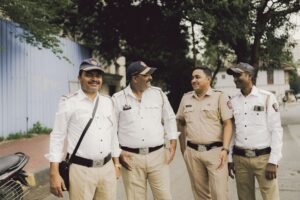
Additional Solicitor General SV Raju, representing the Delhi Police, contended that the protests involved stone-throwing and that the petitions were primarily for publicity, lacking substantive merits. He suggested that the petitioners should have sought remedies through the magistrate court rather than the High Court.
More Read

Despite these contentions, the Bench maintained that the incidents were not isolated, necessitating a comprehensive response from the police. The Court’s directive underscores the need for transparency and accountability in addressing allegations of excessive force during public demonstrations.