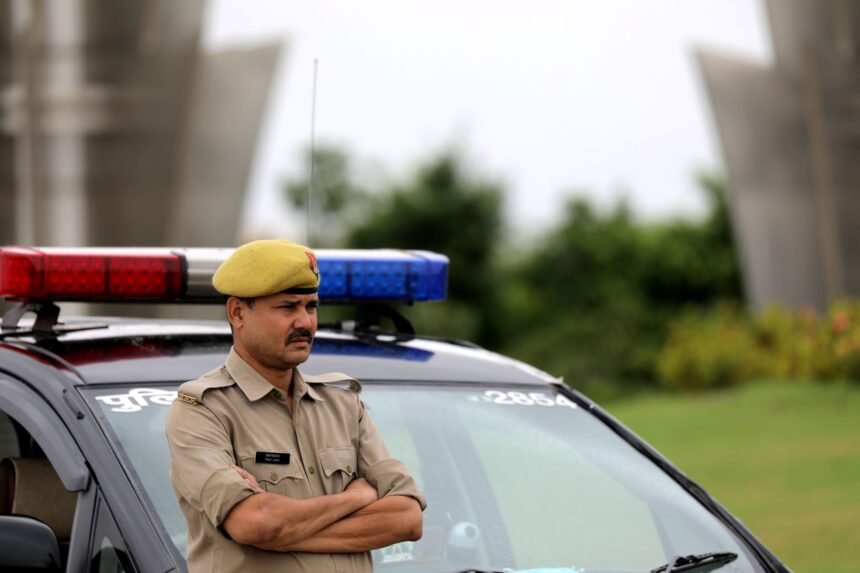
The difference between detention and arrest is not merely a matter of semantics, but rather a crucial issue concerning individual liberty and the procedural safeguards associated with each term. While ‘custody’, ‘detention’, and ‘arrest’ are often used interchangeably in everyday language, legally, they represent distinct points on a spectrum of restraint.
Understanding Custody, Detention, and Arrest
‘Custody’ is the broadest term, encompassing any scenario where an individual submits to police or court control, as established by the Supreme Court in Niranjan Singh v. Prabhakar Rajaram Kharote. ‘Arrest’ is the most restrictive, as it involves an accusation or suspicion of an offense, which activates all the procedural protections provided by the Bharatiya Nagarik Suraksha Sanhita, 2023 (BNSS). ‘Detention’ falls in between, representing custody without any formal accusation, and can occur for a brief inquiry under BNSS Section 170 or through broader security proceedings under Sections 125 to 129, or via preventive detention laws such as the National Security Act (NSA).
Supreme Court Rulings on Custody and Arrest
The Supreme Court’s decision in Directorate of Enforcement v. Deepak Mahajan clarifies that every arrest entails custody, but not all custody amounts to an arrest. In State of Punjab v. Ajaib Singh, the Court further delineated that restraining a person without accusation does not constitute an arrest under Article 22. These distinctions are vital as each point on this spectrum carries varying levels of procedural protections for the individual.
Clarifying Arrest under the Law
Arrest is not exhaustively defined in statutes but is understood as a significant curtailment of personal liberty based on an accusation or suspicion of an offense. This initiates a range of constitutional and legal safeguards. Under the BNSS, arrest must be formalized by a police officer or magistrate, triggering procedural rights designed to protect the accused. Constitutionally, Article 21 prevents deprivation of life or liberty except by due legal process, while Article 22 mandates that an arrested individual be informed of the grounds for arrest, have the right to legal counsel, and must be presented before a magistrate within 24 hours.
Defining Detention
Detention, while not generally defined in the BNSS, is understood within the context of temporary custody for inquiries, preventive measures, and security proceedings. Unlike arrest, detention often serves a preventive rather than punitive purpose. Section 301(a) of the BNSS, within Chapter XXIV, clarifies that ‘detained’ includes preventive detention, highlighting its distinct nature from formal arrest.
More Read

The Four-Point Test: Purpose, Authority, Duration, and Rights
Distinguishing arrest from detention involves examining purpose, legal authority, duration, and the rights of the restrained individual. Arrest is accusatory and investigative, while detention is preventive, aimed at averting potential threats. Legal authority for arrest is outlined in Sections 35 to 62 BNSS, whereas preventive detention is governed by Sections 125 to 143 and special statutes like the NSA. Arrest requires prompt judicial oversight, while detention can last longer under preventive measures. The rights afforded also differ, with arrested individuals enjoying comprehensive procedural safeguards.
The Risks of Informal Detention
Informal detention poses significant concerns. For instance, if someone is held for questioning without being allowed to leave, they are effectively in custody. This situation underscores the need for judicial scrutiny to prevent the State from bypassing constitutional safeguards by merely labeling the restraint as something other than an arrest.
As reaffirmed by the Supreme Court in cases like DK Basu and Joginder Kumar, labels should not dictate the level of protection afforded to an individual. Recent incidents, such as the detention of protesting students without formal arrest, highlight the importance of substance over semantics in protecting personal liberty under constitutional democracy.

Prafull Bhardwaj and Shubhi Singh are advocates practicing before the Supreme Court of India.