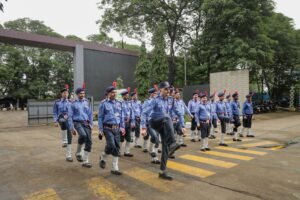
The Supreme Court of India has ruled that military cadets who are dismissed from training due to benchmark disabilities are eligible for a 4% reservation in government jobs, as per Section 34 of the Rights of Persons with Disabilities Act, 2016 (RPwD Act). This decision was rendered by a bench consisting of Justices BV Nagarathna and Manmohan in a case titled In Re: Cadets Disabled in Military Training Struggle.
According to the RPwD Act, government establishments must reserve at least 4% of their total vacancies for individuals with benchmark disabilities, defined as a disability of 40% or more. The Court confirmed that cadets outboarded due to such disabilities are entitled to these reservations and should apply for government employment accordingly.
Justice Nagarathna and Justice Manmohan also addressed the situation of cadets whose disabilities are below the 40% threshold, who are not covered under Section 34 of the RPwD Act. The Court emphasized the need for a suitable scheme to support these individuals. Additional Solicitor General (ASG) N Venkataraman, representing the Central government, assured the Court that he would seek guidance on this matter.
This ruling stems from a suo motu case initiated to explore the challenges faced by military cadets disabled during training. The proceedings were launched following a report by The Indian Express.
ASG Venkataraman informed the Court that the Ministry of Defence has extended Ex-Servicemen Contributory Health Scheme (ECHS) benefits to cadets who are invalidated, ensuring their medical expenses are covered for life. Meanwhile, Senior Advocate Rekha Palli, acting as amicus curiae, pointed out discrepancies in the monthly disability benefits for different trainee categories. Officer trainees or Army cadets receive ₹12,240 per month plus dearness allowance, compared to jawan trainees who receive ₹18,000 before attestation.

Venkataraman further mentioned that the 8th Pay Commission is reviewing the ex gratia payments to outboarded cadets, and the Court has allowed affected cadets to present their concerns to the Commission. “In these circumstances, liberty may be reserved to the concerned persons to make representations and ventilate their grievances before the 8th Pay Commission,” the Court stated, expressing hope for an increase in the ex gratia payments.
The Bench also instructed the department to revisit the Sabharwal Committee Report’s recommendations in light of ongoing proceedings. The Court acknowledged the positive steps taken by States and Union Territories in recognizing outboarded cadets as ex-servicemen for employment purposes.
The next hearing is scheduled for September 8.