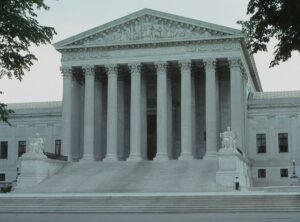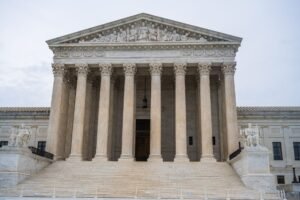
The Supreme Court of India is currently deliberating on a significant case involving the internal dynamics of political parties, as it questions whether parties that champion democratic values are themselves required to operate democratically. This legal inquiry emerged during the court’s hearing on the contentious Shiv Sena name and symbol dispute.
A judicial bench led by Chief Justice of India (CJI) Surya Kant, along with Justices Joymalya Bagchi and V Mohana, is scrutinizing petitions filed by the Uddhav Thackeray faction. These petitions challenge the Election Commission of India’s (ECI) decision in February 2023, which recognized the Eknath Shinde-led faction as the legitimate Shiv Sena, granting it the party’s name and the iconic bow-and-arrow symbol.
CJI Kant highlighted amendments to the Shiv Sena’s constitution, observing, “Initially, the party’s constitution was grounded in democratic principles. However, subsequent amendments have transformed it into a structure centered around a single individual.”
Representing the Uddhav Thackeray faction, Senior Advocate Kapil Sibal argued that the party’s constitutional framework does not fall within the purview of the Election Commission’s authority. “My Lords, whether the party constitution adheres to democratic standards is beyond the Election Commission’s jurisdiction,” Sibal contended.
The Chief Justice raised broader constitutional questions, pondering whether political parties should inherently operate democratically, given their role in safeguarding democratic ideals. Sibal concurred that this issue warrants examination but maintained that constitutional bodies and political parties serve distinct functions. “Constitutional institutions have a higher standard of integrity compared to political entities,” Sibal argued.

Furthermore, Sibal posited that the Election Commission could have mandated amendments to the party’s constitution but should not have ignored the 2018 constitution when resolving the symbol dispute. “Numerous political parties have not conducted organizational elections for years. Has the Commission ever deemed their constitutions undemocratic? This reasoning underpins its disregard for the 2018 constitution here,” he stated.
The bench also questioned Sibal about the relevance of events following disqualification proceedings. Sibal argued that actions like the removal of Sunil Prabhu as Chief Whip constituted voluntary membership relinquishment. Justice Bagchi countered that these events occurred after disqualification petitions were filed, emphasizing, “In disqualification proceedings, subsequent events are generally not considered.”
Sibal referenced the Constitution Bench’s judgment in Subhash Desai, but Justice Bagchi clarified that the ruling concerned the legislature party’s decisions rather than disqualification issues. Sibal retorted that petitions against 16 MLAs were filed on June 23, while others were lodged by July 2, making prior events relevant.
More Read
The court will continue hearing this case on August 11. The Shiv Sena split in 2022 into factions led by Thackeray and Shinde, sparking a dispute over the party’s name and symbol. The ECI based its decision on the legislative wing’s strength, with the Shinde faction commanding 40 MLAs and 13 MPs, compared to the Thackeray faction’s 15 MLAs and 5 MPs.