Delhi High Court’s Decision on PIL Regarding Homeless Voters
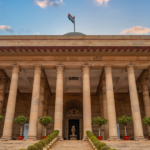
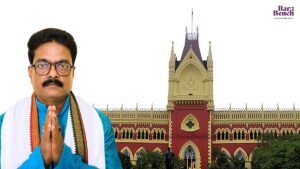
In a recent judicial decision, the Delhi High Court concluded that concerns over the exclusion of homeless individuals from the draft electoral roll, following the Special Intensive Revision (SIR) in Delhi, lack substantial grounds. This finding was articulated by a Division Bench comprising Chief Justice Devendra Kumar Upadhyaya and Justice Tejas Karia.
The public interest litigation (PIL) in question sought the implementation of a special facilitative mechanism by the Election Commission of India (ECI) to address the needs of homeless individuals and those displaced by demolition activities. However, the court opined that existing processes already cater to the determination of ordinary residence for homeless persons, as outlined in Clause 8.5 of the ECI Manual, pursuant to the Representation of People Act. Therefore, the court found the petitioner’s concerns to be unfounded.
Provisions for Homeless Individuals
The court noted that any elector who finds themselves excluded from the Draft Electoral Roll possesses the right to submit Form 6. The Bench highlighted that the Manual mandates Booth Level Officers (BLOs) to verify the residency of homeless individuals by visiting their stated address for more than one night, ensuring that the individual indeed resides there.
Indu Prakash Singh, the petitioner, argued that the SIR process is inherently biased, as it relies on previous electoral roll addresses, potentially excluding approximately 300,000 individuals rendered homeless by demolitions since 2023. This, Singh contended, contravenes Article 326 of the Constitution and the ECI’s own 2011 BLO Handbook, which acknowledges that homelessness should not bar electoral enrolment.
Response from the Election Commission of India
In its defense, the ECI cited Clause 8.5, which allows for the enrollment of homeless and pavement dwellers without documentary residence proof, contingent on BLO verification of their presence at the given location for multiple nights. Additionally, the ECI referenced a Supreme Court order from February 23, advising similarly affected individuals to engage directly with the District BLO rather than seeking relief under Article 32.

After thorough review, the Bench dismissed the petition, citing a lack of evidence regarding specific instances or numbers of excluded individuals.
The legal representation included Senior Advocate Satyakam, along with advocates Talha Abdul Rahman, Faizan Ahmad, Vibha Swaminathan, Sudhanshu Tewari, and Rehan Ghalib Khan for the petitioner. The ECI was represented by Standing Counsel Sanjay Vashishtha and advocates Siddhartha Goswami and Jasmine Morga, while DUSIB was represented by advocates Anuj Chaturvedi, Richa Dhawan, Yashita Jain, and Sahil Bhaskar.
[Read Judgment]